Post in evidenza

Beyond what they sell ha un nuovo sito!

Veniteci a trovare!

Abbiamo cambiato sede virtuale! D’ora in poi troverete tutti i nostri contenuti e tanto altro ancora qui!

Venite a scoprire il nostro nuovo sito e le tante novità che vi aspettano!

ci trovate anche su facebook @beyondwhattheysell

ci trovate anche su instagram @beyondwtsell

We have a new website! come and join us in our new virtual home!

A presto!

Il team di BWTS

Post in evidenza

Revenge Porn e Antico Testamento

(english text below)

«In verità, la tua menzogna ricadrà sulla tua testa. Già l’angelo di Dio ha ricevuto da Dio la sentenza e ti spaccherà in due» (Daniele, 13, 55)

Queste sono le parole che il giovane Daniele rivolge ai due anziani giudici nel celebre episodio dell’Antico Testamento di Susanna e i Vecchioni.

Susanna era una nobile e bellissima giovane di Babilonia che rifiuta di congiungersi con due vecchi magistrati che l’avevano spiata mentre faceva il bagno. Questi, per vendetta, la denunciano per adulterio e ne chiedono la condanna a morte.

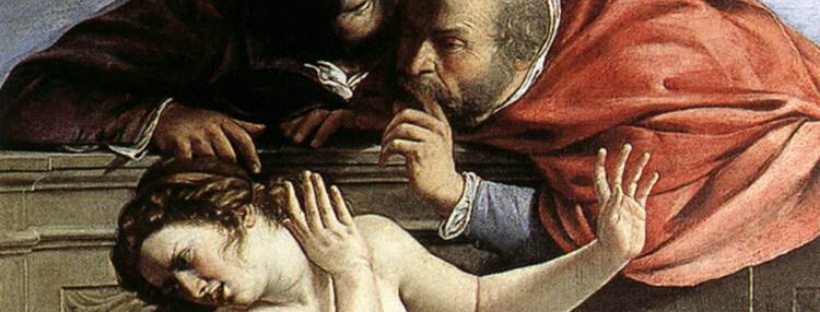
E nella violenta, dolorosa eppure sensuale rappresentazione che l’arte soprattutto del ‘600 è riuscita a dare dell’episodio di Susanna (in basso, la versione dell’unica e sola Artemisia Gentileschi, 1610, che da poco è stata sottoposta ai raggi x rivelando una straordinaria prima versione) vedo un parallelismo perfetto con l’aberrante vicenda dei gruppi Telegram inneggianti a stupri e pieni di pedopornografia. Una silenziosa cloaca dell’Inferno.

Susanna e i vecchioni, Artemisia Gentileschi conservato presso la Collezione Graf von Schönborn, che si trova a Pommersfelden, Germania.

Cosa unisce l’episodio biblico con quello denunciato da Wired? Una storia vecchia come il mondo, anzi, come Adamo ed Eva.

La storia del corpo, soprattutto quello femminile, che proprio nella sua più intima e divina manifestazione, quella nuda, è deriso, distorto, rubato, violentato. Il corpo nudo, persino nell’intimità del bagno come succede a Susanna, non è più sotto il controllo dell’essere umano che lo abita, questo non è più libero di rappresentarlo e diffonderlo secondo la sua volontà (o, per usare termini biblici, secondo il proprio libero arbitrio). La sua raffigurazione viene rubata e distorta per vendetta (dai Vecchi Magistrati o dai membri dei gruppi Telegram) per costringere quel corpo a piegarsi ad un (maschilista) desiderio sessuale, e per punirlo di non aver accettato l’atto sessuale e la sottomissione. Oppure, per deriderlo di averlo fatto.

Ancora una volta, al tempo dei social network come al tempo di Babilonia, il corpo creato ad immagine e somiglianza di Dio viene oltraggiato, la libertà di usarlo nel modo che vogliamo calpestata. In altre parole, il corpo femminile è solo un oggetto di piacere sessuale, violentato per far soffrire la donna in quanto libera, per farla morire, se non fisicamente come Susanna almeno socialmente. E la cosa peggiore è che a perpetrare la diabolica menzogna sono spesso i “Vecchi Magistrati”, i “buoni padri di famiglia”, coloro che per primi ricoprono il ruolo di difensori della giustizia e dei valori. Ed anche se non sei in quell’infernale gruppo Telegram, ignorare la gravità del problema, banalizzarlo, riderne, ti rende complice tanto quanto chi ne fa parte.

«In verità anche la tua menzogna ti ricadrà sulla testa. Ecco l’angelo di Dio ti aspetta con la spada in mano per spaccarti in due e così farti morire».

Marianna Fatti

Revenge Porn and Old Testament

«This lie has cost you your head, for the angel of God has received the sentence from God and will immediately cut you in two.» (Daniel, 13, 55)

These are the words the young Daniel speak to the two elders in the well known Old Testament episode of Susanna and the Elders.

Susanna was a noble, beautiful young woman from Babilonia, who refused the avances of the two old judges that had harassed her while bathing.

For revenge, they publicly accuse her of adultery and claim her death. In the violent, disturbing and still voluptuous representation of the episode handed down moslty by XVI century art (here below a 1610 version of the unique Artemisia Gentileschi, recently studied with x-ray technique revealing an astonishing underpainting)

Susanna and the Elders, Artemisia Gentilischi, Graf von Schönborn Collection, Pommersfelden, Germany

I perceive a perfect parallelism with the ominous case of Telegram groups encouraging rape and paedopornography. A quiet infernal cloaca. Which is the connection between this biblical episode and the one reported by Wired in Italy?

An history as old as Adam and Eve. The history of a body, especially the female one, that paradoxically in its most intimate and divine manifestation, the naked one, is mocked, distorted, jacked, raped.
Even in the bath privacy as in the Susanna’s case, the naked body is no more under the control of the human being inhabitating it, this can no more represent and communicate it as he or she wishes (or, to use biblical terms, according to its free will).

Its representation is stolen and distorted in revenge (either by the Elders or by Telegram users), to force that body to bend to a masculinist sexual desire, and to punish it for having denied sex and submission. Or, on the other hand, to mock it for having consented to it. Once again, in the social media era as in the Babylon one, the body made in the image and likeness of God is offended, the freedom to make use of it trampled. In oterh words, female body becomes a mere object of sexual pleasure, raped to torture the women as a free creature till she dies, if not physically as Susanna at least socially. And the worst thing is that perpetrators are usually “the Judges”, the “good family men”, those we call on to defend values and justice. And even if you’re not in one of those infernal Telegram group, ignoring the seriousness of the problem, trivialising it, mocking it, makes you a partner in all of this.

«This lie has cost you also your head, for the angel of God is waiting with his sword to split you in two, so as to destroy you both»

Text and translation by Marianna Fatti

Post in evidenza

Io e la depilazione

English text below

Il mio rapporto con la depilazione è iniziato molto presto: mia madre mi portò a fare la ceretta alle gambe l’ultimo giorno di quinta elementare. Mi ricordo che fu un giorno divertente, dolore a parte, perché lei lo rese divertente.

La vergogna per i peli invece è arrivata dopo. Mi ricordo un episodio in particolare. Fuori dalla scuola, in seconda media, un compagno mi disse, con il preciso intento di umiliarmi: “perché non ti depili? Hai il monociglio! È orribile!” e io risposi “anche tu ce l’hai!” e lui “io sono un maschio!”.  

Ma già lo sapevo da me che i miei peli erano più brutti dei suoi.

La vergogna per i peli è arrivata piano piano, con episodi del genere, con i commenti di compagni e compagne sui baffetti e sopracciglia. La vergogna è cresciuta con i commenti dell’estetista “tutti questi peli li togliamo, sennò come fa un ragazzo a trovarti attraente?”, e con i commenti del primo fidanzato: “ma questi peletti sul viso non li avevo notati, te li puoi togliere, vero?” e con tanti altri piccoli episodi, frasi spesso dette senza malignità e cattiveria, semplicemente perché “è normale”, indicazione lampante di quanto questo stigma dei peli sia presente in noi, normalizzato.

La vergogna dei miei peli l’avevo così radicata in me che a un certo punto della vita uscire senza essere perfettamente depilata, rasata, cerettata, mi creava ansia. Mi sentivo sbagliata, sentivo la necessità di tenere a bada il mio corpo, di modificarlo, di nascondere quei peli che, tutti mi dicevano, non dovevano essere lì.

La depilazione è un business, non ci prendiamo in giro, c’è tanta gente che per fare i soldi deve convincerci che i nostri peli non vanno bene. Ma non è solo questo, essere liscia e depilata rientra in uno standard di bellezza femminile (occidentale), il quale come tutti gli standard che ci vengono imposti è irrealizzabile e irreale, eppure è lì, con la sua presenza, con il suo giudizio silenzioso ti ricorda sempre che non sei abbastanza.

I peli sono brutti, sporchi e non desiderabili, e tu, se li hai, sei brutta, sporca e non desiderabile.

Neanche nelle pubblicità dei prodotti per la depilazione le modelle hanno i peli! L’avete notato? Queste ragazze, che stanno sedute sul bordo della vasca perfettamente comode, si fanno la ceretta su gambe già depilate, perché se in tv si vedessero dei peli femminili sarebbe la fine del mondo, giusto?

Tutta questa pressione costante nel controllare il corpo, piegarlo, raddrizzarlo, correggerlo, adeguarlo ad un modello irreale.

Che poi se ti fermi a riflettere ti chiedi: ma chi l’ha deciso?

Ma non è nemmeno in discussione, è così e basta.

Qualcuno ha provato a metterlo in discussione: perché mi devo depilare? Perché devo tagliare, strappare, bruciare, estirpare questi peli che il mio corpo con tanta fatica fa crescere? Perché non posso amarli?

Con tutto questo non voglio dire che la depilazione sia male o sia bene. Penso però che la pressione la vergogna siano male, ci facciano male. La vergogna verso il proprio corpo è qualcosa che ci accompagna tutti i giorni. Sarebbe bello provare a superarla e guardare i propri peli con un po’ di tenerezza!

Irene

fonte: https://www.desired.de/beauty/schoene-haut/rote-punkte-an-den-beinen/

My relationship with hair removal started very early: my mother took me to wax my legs on the last day of elementary school. I remember it was a fun day, pain aside, because she made it fun.

The shame for body hair came later. I remember one episode in particular. Outside school, when I was 12, a classmate said to me, with the intention of humiliating me: “why don’t you shave? You have a unibrow! It’s horrible!” and I replied, “you have it too!” and he said: “I’m a boy!”.

But I already knew that somehow my hair was uglier than his.

The shame for body hair came slowly, with many episodes, with the comments of classmates on the moustache and eyebrows. The shame grew with the beautician’s comments “we have to wax them all, otherwise boy will not find you attractive!”, And with the comments of the first boyfriend:  “I didn’t notice these hairs on your face, you can shave it, right? ” and with many other small episodes, phrases often said without malice, simply because “it’s normal”, a clear indication of how normalized this stigma of hair is in us.

The shame for my body hair was so rooted in me that at some point in life, going out without being perfectly shaved and waxed, created me anxiety. I felt wrong, I felt the need to control my body, to modify it, to hide those hairs that, everyone told me, should not be there.

Hair removal is a business, we all know that, there are so many people that in order to make money, have to convince us that our hair shouldn’t be there.  But it is not only this, being smooth and hairless falls within a standard of female (western) beauty, which, like all the standards that are imposed on us, is impossible and unreal, yet it is there, with its presence, with its silent judgment always reminds you that you are not enough.

Body hair are ugly, dirty and undesirable, and you, if you have them, are ugly, dirty and undesirable.

Not even in the advertising of hair removal products, models have body hair! Have you noticed it? These girls, who are sitting on the edge of the tub perfectly comfortable, wax their already perfectly waxed legs, because seeing female body hair on tv would end the world, right?

All this constant pressure in controlling the body, bending it, straightening it, correcting it, adapting it to an unreal model.

But if you stop and think about it: who decided it?

Unfortunately, it’s not even a discussion, it’s just like that.

Someone tried to question it: why do I have to shave? Why do I have to cut, tear, burn, weed out these hairs that my body grows with so much effort? Why can’t I love them?

With all this I don’t mean that hair removal is bad or good. But I think that pressure and shame are bad, they hurt us. Shame towards one’s body is something that accompanies us every day. It would be nice to try to overcome it and look at our body hair with a little tenderness!

Irene

Post in evidenza

Una storia chiamata Femminismo

pt.4

A story called Feminism (english text below)

L’ultima volta c’eravamo lasciati con queste domande, ricordate?

(in caso non vi ricordiate cliccate qua)

In questo ultimo articolo, che chiude la serie “Una storia chiamata femminismo” non mi va di parlare troppo di storia, perché ormai con il nostro racconto siamo arrivati agli anni 2000, ancora vicini, troppo vicini, le ferite sono ancora aperte. Parlerei di fenomeni in cui siamo immersi, mi mettere in cattedra a spiegarvi le cose che viviamo tutti i giorni. Ma parlarne significa prendere una posizione. Restare imparziali è difficile e presuntuoso, come se si volesse implicare di essere un qualche tipo di narratore esterno ed onnisciente.

Non mi va.

Ecco quindi che prendo una posizione e decido di non raccontarvi la Storia, ma la mia storia!

Quello degli anni 2000 dovrebbe essere il femminismo della quarta ondata (ok vi do giusto qualche punto di riferimento) che ha ripreso potenza in anni davvero recenti con “non una di meno”, la campagna partita dall’Argentina per contrastare l’altissimo numero di femminicidi, e con il movimento #metoo, che ha portato alla luce le molestie dietro la scintillante Hollywood. Per citare solo due dei casi più eclatanti e globali. Ci sono poi tante altre spinte nel femminismo contemporaneo, tante e tali che, di nuovo, è difficile parlare di un solo femminismo. Altri femminismi che mi vengono in mente sono quello islamico, quello delle donne nere, quello delle donne lesbiche e delle trans, quello postcoloniale, l’eco-femminismo, il cyber femminismo.  

Tante possibilità, tante sfaccettature che rendono complesso il quadro.

 Giustamente, il mondo è complesso, la questione è complessa, e voler cercare una risposta semplice sarebbe sciocco. Un problema complesso ha una soluzione complessa, per fortuna!

Personalmente trovo rincuorante la complessità, l’esistenza di punti di vista diversi dal mio mi rassicurano che non posso essere assolutamente nel giusto o assolutamente nel torto.

Tutte queste istanze vanno, secondo me, conosciute, studiate, ascoltate, cercando, quanto più possibile, di lasciare da parte il proprio punto di vista e cercando di comprendere quello di altr*. L’errore più grande che si può fare ora è sminuire le lotte di altre solo perché non le capiamo, perché non ci toccano.

A questo punto direi che sappiamo tutti dove sto andando a parare, giusto?

INTERSEZIONALITÁ. FEMMINISMO INTERSEZIONALE!

Esatto.

Le femministe radicali magari mi odieranno, sbufferanno e chiuderanno l’articolo.

Grazie e arrivederci!

L’ho detto all’inizio che questa è la mia storia. Il mio femminismo.  

Cosa vuol dire allora femminismo intersezionale?

Vuol dire ascoltare tutte queste istanze, tutte queste voci e capire che alla base c’è la stessa battaglia. Che la lotta è condivisa e va oltra la mera biologia, va oltre il rapporto tra uomo e donna, travalica il nostro universo bianco e piccolo borghese.  

Vuol dire che alla base di tutto non c’è una lotta tra sessi, lei contro lui, uomo contro donna. Alla base di tutto c’è un sistema di potere. Un sistema di potere che si nutre di oppressione e di supremazia. Un sistema che favorisce uomo su donna, bianco su nero (bianco su tutto il resto per essere precisi), ricco su povero, etero su gay (etero su tutto il resto) e così via.

“Forme di esclusione diverse – come il sessismo, il razzismo, la xenofobia, l’omofobia, la transfobia e chi più ne ha più ne metta – non si presentano come realtà separate nella vita di tutti i giorni, bensì come elementi interconnessi. È da questa presa di coscienza che il femminismo non è più solo la lotta della donna bianca per il suffragio femminile, ma diventa la battaglia di tutti verso una società più equa e inclusiva.”  Come dice giustamente Grazia Polizzi su Bossy.

Nel nostro caso questo sistema di potere lo chiamiamo patriarcato. Quando diciamo che il patriarcato va sovvertito non intendiamo dire che gli uomini devono essere messi in catene e devono subire quello che hanno subito le donne per secoli, intendiamo dire che non siamo più disposte ad accettare una società che ci opprime, che ci soffoca, che ci rinchiude in uno stereotipo.

Una società che è fondata sulla prevaricazione.

L’elemento fondamentale di questo patriarcato è il privilegio, chi ha potere ha un privilegio. L’uomo ha un privilegio rispetto alla donna (non è un giudizio morale, non offendetevi). Ma anche la donna ha un privilegio, una donna bianca e occidentale nasce con un privilegio rispetto ad una donna nera, per esempio. Il privilegio deriva da dove si nasce, come si cresce, con chi si cresce, dipende dalla classe sociale, dal posto del mondo in cui si è, dall’accesso all’educazione che si ha, dalla cultura, dal periodo storico e da tanti altri fattori economici, sociali, politici, geografici; non dipende da quello che si ha tra le gambe, ma da come la società in cui si è dà valore a ciò che si ha tra le gambe.

La lotta non è “di genere”, la lotta è contro il sistema di potere!

Il punto è, quindi, che lottare per la propria causa e basta, non ha senso, perché non abbatte il patriarcato!

Lottare per i diritti delle donne e lasciare indietro le donne trans, le lesbiche, le persone non – binarie è limitato, restrittivo e infine inutile.

Questo vuol dire intersezionalità. Rendersi conto che la situazione è complessa e offrire un’analisi complessa. Fare una proposta di cambiamento complessa.

Quello che emerge quindi, da questo femminismo della quarta ondata, è il tentativo di dare una nuova lettura alla società, di aprirsi ad universo polifonico e a più voci e andare alla ricerca di una soluzione più giusta, se non per tutti, almeno per molti di più.

Questo è il femminismo che si sta facendo strada, quello che parla di grassofobia, di eteronormatività, di non -binarietà, di abilismo, di disabilità, di migrazione (quattro parole su sei non fanno nemmeno parte del vocabolario italiano corrente, questo dà un’idea di quanto sia nuova questa storia). Quello che parla di razza, di classe, di genere, di potere e di sistema, di punti di vista, di prospettive, di sfaccettature, di complessità, di alterità.

Questo è quello che, spero, guiderà la lotta dà qui in avanti, il resto, io credo, rimarrà indietro.

È il femminismo di tutti, la lotta di tutti.

Di tutti quelli che sono arrabbiati.

E, amici miei, se non siete arrabbiati non state prestando attenzione.

Una storia chiamata Femminismo finisce qui, se vi siete pers* le puntate precedenti potete recuperare qui: 1, 2, 3.

È stato un bel viaggio! 

Irene

per saperne di più consiglio:

Abbatto i muri

Bossy: femminismo separatista? No, femminismo intersezionale

Bossy: Queste femministe sono proprio esagerate. quale femminismo è considerato accettabile

Bossy: le donne trans sono mie sorelle

Bossy: essere un papà femminista

Non una di meno

Parità in Pillole, puntata 48: cos’è il femminismo intersezionale?

Anticorpi, Podcast di The Vision, di Jennifer Guerra. In particolare, gli episodi: 6, 8, 9 della stagione uno.

What is Feminism today? What can Feminism do for us today?

Last time we were left with this question, remember?

In this last article, which ended the series “A story called Feminism” I don’t want to talk too much about history, because now with our story we have come to the 2000s, a period still close, too close, the wounds are still open. I would have to talk about issue in which we are immersed, explain to you the things we live in every day. But talking about it means taking a stand. Staying impartial is difficult and conceited, as if it meant that I am some kind of external and omniscient narrator. I don’t want to. So, I take a stand and decide not to tell you the history, but my story!

That of the 2000s should be the fourth wave of feminism (ok I’ll just give you some points of reference) pushed by the campaign “ni una menos” born in  Argentina to raise awareness about the high number of feminicides and with the #metoo movement, which has brought to light the harassment behind the glittering Hollywood. To cite only two more striking and global cases. Then there are many other thrusts in contemporary feminism, many and such that, again, it is difficult to speak of a single feminism. Other feminisms that come to mind are the Islamic one, that of black women, that of lesbian and trans women, the postcolonial one, eco-feminism, cyber feminism.

So many possibilities, so many facets that make the picture complex.

Rightly, the world is complex, the question is complex, and wanting to find a simple answer would be foolish. A complex problem has a complex solution, luckily!

Personally, I find complexity comforting, the existence of points of view different from mine reassures me that I cannot be absolutely right or absolutely wrong.

All these instances should, in my opinion, be known, studied, listened to, trying, as much as possible, to leave aside one’s point of view and try to understand that of others. The biggest mistake that can be done now is to diminish the struggles of others just because we don’t understand them, because they don’t concern us.

At this point I think we all know where I am going with this, don’t we?

INTERSECTIONALITY. INTERSECTIONAL FEMINISM!

Exactly right.

At this point the radical feminists will maybe hate me, snort and close the article.

Thank you and goodbye!

I said at the beginning that this is my story. My feminism.

So, what does intersectional feminism mean?

It means listening to all these instances, all these voices and understanding that the same battle is the core. That the struggle is shared and goes beyond mere biology, goes beyond the relationship between man and woman, goes beyond our white and petty bourgeois universe.

It means that at the core of everything there is no struggle between the sexes, she against him, man against woman. At the base of everything there is a system of power. A system of power fed by oppression and supremacy. A system that advantages man over woman, white over black (white over everything else to be precise), rich over poor, straight over gay (straight over everything else) and so on.

“Different forms of exclusion – such as sexism, racism, xenophobia, homophobia, transphobia and whoever has the most to put it – do not present themselves as separate realities in everyday life, but as interconnected elements. It is from this realization that feminism is no longer just the white woman’s struggle for female suffrage, but it becomes everyone’s battle for a fairer and more inclusive society. ” As Grazia Polizzi rightly says about Bossy.

In our case we call this system of power patriarchy. When we say that patriarchy must be subverted we do not mean that men must be put in chains and must suffer what women have suffered for centuries, but instead we are saying that we are no longer willing to accept a society that oppresses us, that suffocates us, that locks us in a stereotype. A society rooted in prevarication.

The fundamental element of this patriarchy is privilege, whoever has power has a privilege. The man has a privilege over the woman, (it is not a moral judgment, do not be offended). But the woman also has a privilege, a white and western woman is born with a privilege if we compare her to a black woman, for example. The privilege comes from the place where one’s  born, how one grows up, who one grows up with, it depends on the social class, on the place of the world in which one is, on the access to education, on culture, on the historical period and on many other economic, social, political, geographical factors; it doesn’t depend on what one has between their legs, but on how the society gives value to that something between the legs.

The struggle is not a gender based one, the struggle is against the system of power!

The point is, therefore, that fighting for one’s own cause is meaningless, because it does not bring down patriarchy!

Fighting for women’s rights and leaving trans women, lesbians and non-binary people behind is limited, restrictive and ultimately useless.

This means intersectionality. Realizing that the situation is complex and offering a complex analysis. Make a complex proposal for change.

What emerges therefore, from this fourth wave feminism, is the attempt to give a new interpretation to society, to open up to the polyphonic universe of different voices and to look for a fairer solution, if not for all, at least for many of more.

This is the feminism that is making its way, the one that speaks of fat shaming, heteronormativity, non-binarity, abilism, disability, migration. The one that speaks of race, class, gender, power and system, of points of view, of perspectives, of facets, of complexity, of otherness.

This is what, I hope, will lead the fight forward, the rest, I believe, will be left behind.

It is everyone’s feminism, everyone’s struggle.

Of all those who are angry.

And, my friends, if you are not angry you are not paying attention.

text and translation by Irene Santoro
Post in evidenza

Donne d’Albania: Aquile Libere Women of Albania: Free Eagles


Ho dovuto affrontare molte volte il tema della donna albanese ed è stato sempre molto difficile. Innanzitutto perché il presupposto è sbagliato. Non si può parlare di donna albanese, così come non si può parlare di una donna al singolare in nessun caso, tanto più nell’ Albania “una e mille” (perdonateci se citiamo Montanelli)!


In ogni caso, non potrò certo parlare di donne albanesi in un articolo, ma potrò fare una veloce panoramica dei temi che affronteremo – e approfondiremo – prima di iniziare a capirci qualcosa.

Partendo dall’inizio, spieghiamo il perché del titolo “aquile libere”.

Il nome (in albanese Shqipëria) dell’Albania è direttamente legato al suo animale-simbolo, totem, l’aquila: infatti “shqiponjë” o “shqipe” significa aquila e spesso, ci si riferisce al paese come al “Paese delle Aquile”.            
E libere? Perché gli Albanesi discendono dagli Illiri (Ilir), nome proprio ancora oggi usato (Ilir si chiama anche mio marito) che significa, tra le altre cose: libero; ed infatti, andando indietro nella storia, bisognerebbe iniziare a parlare del matriarcato, poi si potrebbe parlare dei diritti di cui godevano le donne illiriche, facendo un confronto con la condizione femminile greca e romana, narrando anche la storia della regina Teuta, la regina pirata (non dei pirati!) che sfidò Roma – e ben prima di Cleopatra e con altri strumenti.

Ci sono altre figure così che conosciamo nella storia europea?

Mi viene in mente Olimpia, la madre di Alessandro, figura centrale anche nella formazione del figlio… Ecco, anche queste figure andrebbero “studiate”. Proseguendo con la storia, la lettura degli “Statuti di Scutari”, entrato in vigore prima del 1330, è sorprendente e ci fa entrare in un medioevo “illuminato” veneziano e scutarino, e quindi albanese. Allo stesso tempo però, un altro codice consuetudinario, il Kanun di Lekë Dukagjini, di cui tanto si discute, tanto quanto accende gli animi tanto poco si conosce. Esso tratta del tema controverso, della vendetta, la gjakmarrja ma è soprattutto improntato sulla famiglia, il matrimonio e i ruoli sociali, la donna, ma anche le cosiddette “burrneshë“, le donne che di loro spontanea volontà diventano uomini (tanto da essere non solo socialmente riconosciute, ma anche rispettate e riverite).          

Che immagine si delinea nelle fiabe? I miti delle città albanesi parlano spesso di donne che si sacrificano in nome della città… ma cos’altro ci vogliono dire?      

Durante l’occupazione turca avvennero molti cambiamenti nella società albanese quali l’abbigliamento, il tempo libero, l’intrattenimento e le occasioni sociali. Sempre tenendo presente però che in Albania convivevano più religioni.  
A proposito all’occupazione ottomana, risulterà interessante sapere che in Albania l’8 Marzo si festeggia preceduto dal 7 Marzo, festa degli insegnanti in quanto quel giorno del 1887, a Korça (Coritza), venne aperta la prima scuola di lingua albanese.

Un giusto interrogativo da porsi, ma molto complicato da sciogliere, è quello degli immaginari femminili religiosi e spirituali, tra paganesimo e cristianesimo, tra l’islam sunnita e quello bektashi…

E ancora: nella lotta contro i nemici, gli uomini combattono…e le donne? In realtà anche loro! Bisognerebbe parlare delle figure storiche e meno storiche, le eroine leggendarie (Nora e Kelmendit, Tringe Smajli, Andronika/Donika Kastrioti, Angelina Komnena, Elena Lukrecia Peskopia, Dhaskarina Pinoce, Bubulina, Shote Galica ecc.), le intellettuali patriottiche (Dora d’Istria / Elena Gjika, Musine Kokalari, Marie Coba ecc.), le “straniere” viaggiatrici dell’Albania (come la famosa Edith Mary Durham, Isadora Duncan, Mary Adelaide Walker, Margaret Hasluck, Marie Amelie von Godin) e la famiglia monarchica.    

Infine, avvicinandoci ai giorni nostri, non si possono non toccare i temi dei diritti ottenuti – senza battaglie – per le donne albanesi (aborto, matrimonio e lavoro), del significato del ‘68 albanese; della donna nella propaganda comunista, nei film e nelle professioni; delle ferite sociali della transizione albanese nell’era moderna come la tratta degli esseri umani, l’immigrazione, le violenze della guerra in Kosovo, per finire con il concetto di emancipazione e diktat di bellezza che vigono oggi come modello in Albania.       

Questa è una breve panoramica di quanto affronteremo con “Beyond what they sell” in merito alla figura femminile del Paese delle Aquile. Ambizioso, ma ci proveremo!    

Naturalmente ci piacerebbe sapere cosa ne pensate voi, che idea o esperienza avete del tema e cosa vi incuriosisce di più?

Fioralba Duma

I had to face the issue of the Albanian woman many times and it has always been very difficult for me. First of all, because the assumption is wrong. We can’t talk about an Albanian woman, as much as we can’t talk about a woman singularly in any case, especially in the “one and a thousand” Albania (forgive us if we cite Montanelli)!


Anyway, I will certainly not be able to talk about Albanian women in an article, but I will be able to do a quick overview of the topics that we will tackle – and deepen – before we begin to understand something.

Starting from the beginning, let’s explain the reason why the title is “free eagles”. The name of Albania (in Albanian is Shqipëria) is directly linked to its animal-symbol, totem, the eagle: indeed “shqiponjë”or “shqipe” means eagle and often, we refer to the country as “Land of Eagles”.


And what about “free”? Because the Albanians descend from the Illyrians (tribe of Ilir), proper first name still used today (Ilir is my husband’s name) which means, among other things, free, and indeed, going back in history, we should start talking about matriarchy, then we could talk about the rights enjoyed by Illyrian women, comparing them to the  female condition in Greek and Roman society, also telling the story of the Teuta queen, the pirate queen (not the queen of pirates!) who challenged  Rome – well before Cleopatra did and with other tools.

Are there other figures like this that we know in European history?

I can recall Olympia, Alexander’s mother, a central figure also in the education of her son …

Here, even these figures should be “studied”. Continuing with the history, reading the “Statuti di Scutari”, which were ruled before 1330, is surprising and leads us into a “illuminated” Venetian and Albanian Middle Ages.

At the same time, however, another customary code, “Kanun of Lekë Dukagjini”, of whom so much is discussed, as much as it ignites souls, so little is known.

It concerns the controversial theme of revenge, “gjakmarrja” but it is mainly focused on the family, marriage and social roles, the woman, but also the so-called “burrneshë”, women who voluntarily become men (so much so that they are not only socially recognized, but also respected and revered).

What female figure is, then, outlined in fairy tales? The myths of Albanian cities often speak of women who sacrifice themselves in the name of the city … but what else do they wish to tell us?


During the Turkish occupation, many changes occurred in the Albanian society such as clothing, leisure, entertainment and social occasions. However always keeping in mind that in Albania more religions coexisted.
A right question to ask, but very complicated to explain, is the one about religious and spiritual female imaginaries, between paganism and Christianity, and between Sunni and Bektashi Islam.

Speaking of the Ottoman occupation, it will be interesting to know that in Albania March the 8th is celebrated preceded by March 7th which is Teachers’ day because in 1887 in that day in Korça (Coritza), the first school  in Albanian was opened.

And again: against the enemies, men fight… and women?

Actually, they fight too!

We should talk about the historical and less historical figures, the legendary heroines (Nora of Kelmend, Tringe Smajli, Andronika/Donika Kastrioti, Angelina Komnena, Elena Lukrecia Peskopia, Dhaskarina Pinoce, Bubulina, Shote Galica etc.), the patriotic intellectuals (Dora d’Istria / Elena Gjika, Musine Kokalari, Marie Çoba etc.), the “foreign” travelers of Albania (such as the famous Edith Mary Durham, Isadora Duncan, Mary Adelaide Walker, Margaret Hasluck, Marie Amelie von Godin) and the monarchist family.
Finally, getting closer to the present day, one cannot leave without addressing the issues of rights obtained – without battles – for Albanian women (abortion, marriage and labor), of the meaning of the Albanian 1968; the women in the communist propaganda, in movies and in the professions; about the social wounds of the Albanian transition in the modern era such as trafficking of human beings, immigration, the violence of the war in Kosovo, to end with the concept of emancipation and pressure of beauty that exist today as a model in Albania.

This is a brief overview of what we will face with “Beyond what they sell” regarding the female figure of the Land of Eagles.

Ambitious, but we’ll try!

Of course, we would like to know what you think, what idea or experience do you have of the topic and what intrigues you most?

text and translation by Fioralba Duma

Post in evidenza

Pinkwashing

(English version below)

Questo articolo nasce da una mia confusione.
Sin dalle prime lezioni sulla responsabilità sociale d’impresa, mi è stato insegnato il concetto di greenwashing: una pratica di marketing adottata da molte multinazionali che dichiarano il
proprio impegno per la sostenibilità ambientale quando nella realtà non adottano significativi cambiamenti per ridurre il proprio impatto, o peggio ancora usano questa tattica per sviare l’attenzione dagli effetti disastrosi della propria attività produttiva.
Quando ho usato la prima volta il termine “pinkwashing”, credo in una conversazione con dei colleghi, è stata una spontanea improvvisazione. Non avevo in mente una definizione esatta,
ma prendendo anche io in prestito la metafora del whitewashing (imbiancare, coprire con la calce) come nel termine greenwashing, mi riferivo in modo generico a quando le aziende enfatizzano la presenza femminile all’interno del loro organico e/o il loro supporto a progetti per l’uguaglianza di genere quando in realtà le donne sono escluse dagli organi apicali e la cultura aziendale si rivela subdolamente sessista.
Ma Google mi sorprende sempre.
Il termine pinkwashing, in realtà, si riferisce a due fenomeni distinti e molto più specifici.

http://tumoreseno.blogspot.com/2015/10/think-before-you-pink-quando-la-lotta.html

Pinkwashing e tumore al seno – L’associazione Breast Cancer Action ha coniato nel 2002 questo termine per indicare quelle aziende e organizzazioni che dichiarano la loro adesione alla lotta contro il tumore al seno apponendo il famoso fiocco rosa sui loro prodotti… che però sono potenzialmente cancerogeni. Il termine include anche eventi e campagne sul tema, come le “marce in rosa”. L’esempio più famoso di questo genere di pinkwashing è stato una campagna di Avon nel 2001: i rossetti creati appositamente per la raccolta fondi contro il tumore al seno contenevano probabilmente ingredienti che influivano sulla produzione ormonale favorendo l’insorgenza di tumore. Tuttavia, i casi di pinkwashing sul tumore al seno spaziano dal settore automobilistico a quello dei trapani. Inoltre, spesso solo una piccola percentuale dei fondi raccolti vengono effettivamente devoluti a ricerca e prevenzione, persino nel caso in cui l’ente promotore sia una fondazione. Il pinkwashing di questo tipo non
fornisce solo informazioni ingannevoli su una azienda o sui suoi prodotti, ma ha anche la conseguenza indiretta di riformulare la narrativa sul tumore al seno: i consumatori (peggio ancora, i malati) vengono indotti a concentrarsi sulla speranza di una cura alla malattia, e incoraggiati a “vedere il lato positivo” della sopravvivenza al tumore, distogliendo completamente l’attenzione dalla ricerca sulle cause ambientali, dalla prevenzione e dal problema del diverso accesso alle cure ed alla sensibilizzazione di rilevanti gruppi della
popolazione svantaggiata.

Pinkwashing e diritti LGBTQ+ . In questo caso, il termine si lega al conflitto israeliano-palestinese.Fu così chiamata la strategia del governo israeliano per oscurare le continue violazioni dei diritti umani commesse durante la sua guerra con la Palestina pubblicizzando
invece la sua apertura nei confronti della comunità LGBTQ+. Questo attraverso campagne marketing ed eventi ad hoc che proponevano il paese come la “mecca gay” del Medio Oriente, e un rifugio per i gay palestinesi che, secondo Israele, erano oppressi in un paese
non abbastanza civilizzato da riconoscere i loro diritti. In realtà, non solo di fatto la comunità LGBTQ+ palestinese non viene coinvolta in questi programmi, e il paese continua a non riconoscerne i diritti sul piano legale, ma se anche erano i benvenuti come “rifugiati” a Tel
Aviv, la loro identità araba e palestinese veniva subdolamente repressa. Questa tattica ha generato enormi proteste organizzate, come Pinkwatching Israel, che sostiene la causa del movimento palestinese “BDS” (Boycott, Divest, Sanction– Boicottare, Disinvestire in e Sanzionare [Israele]). Questo tipo di pinkwashing è stato osservato anche in USA, Francia, Olanda, e rientra nel fenomeno chiamato “omonazionalismo”: persone LGBTQ+ e i loro diritti
vengono assimilate a movimenti di (estrema) destra e nazionalisti ed alla loro propaganda anti-islamica e anti-immigrati, con il pretesto di difenderli dal “fanatismo omofobo” delle minoranze religiose.

http://www.pinkwatchingisrael.com/

E quindi? Cos’è il pinkwashing? Scoperte queste due definizioni così differenti, e la loro distanza rispetto a quella che avevo in testa all’inizio della mia ricerca, mi sono chiesta: cosa hanno in comune? Quali sono i fondamenti del pinkwashing? In primo luogo, comparandole con l’originario concetto di greenwashing, entrambe le definizioni di pinkwashing hanno come oggetto persone (donne, queer). Quindi evidentemente il pinkwashing è un corrispettivo “sociale” del greenwashing, ricomponendo così il binomio indissolubile “planet” e “people”, ambiente e società, che accompagna il “profitto” nel celebre paradigma padre della sostenibilità d’impresa.

Inoltre, queste persone sono accomunate da due elementi: il loro appartenere a categorie notoriamente discriminate e la loro sofferenza. E proprio questa caratteristica rende in entrambi i casi il pinkwashing così efficace: una patologia diffusa e grave come il tumore al seno e la tutela della comunità LGBTQ+ e dei suoi diritti sono temi con un carico emotivo enorme, e capaci di suscitare un immediato senso di appartenenza e desiderio di azione da
parte dei “target”. Questi tendono quindi a considerare positivamente quelle iniziative che promettono di sostenere la loro causa, da prodotti con fiocchi rosa alle campagne di marketing di governi nazionalisti. Tirando le fila di questo viaggio nel pinkwashing, mi viene in mente una nuova, generale definizione del fenomeno, ma che cerca di cogliere gli aspetti comuni delle varie definizioni: pinkwashing come tattica di marketing per la quale un’organizzazione comunica il proprio impegno nella tutela dei diritti umani (ad esempio, la salute, i diritti civili, le pari opportunità) di una minoranza o di un gruppo solitamente discriminato quando, nella realtà, non attua nessuna concreta azione a questo fino e/o con la propria attività viola quegli stessi diritti o quelli di altri gruppi.
Aldilà delle definizioni, il pink e il greenwashing insegnano che è fondamentale adottare un approccio critico al consumo, cercando di verificare sempre il concreto operato – se non le reali intenzioni – di un’organizzazione che si autoproclama paladina dell’ambiente o dei diritti umani.
Come? Beh, Google ci sorprenderà sempre.

Testo e traduzione in inglese a cura di Marianna Fatti

English version

Normal 0 false false false IT X-NONE AR-SA


/* Style Definitions */ table.MsoNormalTable {mso-style-name:”Tabella normale”; mso-tstyle-rowband-size:0; mso-tstyle-colband-size:0; mso-style-noshow:yes; mso-style-priority:99; mso-style-parent:””; mso-padding-alt:0cm 5.4pt 0cm 5.4pt; mso-para-margin-top:0cm; mso-para-margin-right:0cm; mso-para-margin-bottom:8.0pt; mso-para-margin-left:0cm; line-height:107%; mso-pagination:widow-orphan; font-size:11.0pt; font-family:”Calibri”,sans-serif; mso-ascii-font-family:Calibri; mso-ascii-theme-font:minor-latin; mso-hansi-font-family:Calibri; mso-hansi-theme-font:minor-latin; mso-bidi-font-family:Arial; mso-bidi-theme-font:minor-bidi; mso-fareast-language:EN-US;}


This article originates from a misunderstanding.
Since my first classes on corporate social responsibility I’ve been introduced to the concept of greenwashing: A marketing technique whereby multinationals declares their commitment to environmental sustainability while in fact not implementing any organisational change to reduce their footprint, or even worse
they use these messages to mislead the public from the
devastating impacts of their operations.
When I first used the term “pinkwashing”, during a conversation with colleagues if I’m not wrong, it came spontaneously. I wasn’t aware of an official definition, but adopting the “withewashing” metaphor as in greenwashing, I was generically referring to those companies
that claims an advanced gender balance or their support to gender equality initiatives actually excluding them from executive bodies and subtly enhancing sexist culture.
But Google always surprises me.
The word “pinkwashing” actually indicates two different, much more specific phenomena.
Pinkwashing and breast tumor – The Breast Cancer Action association created this word in 2002 to tag those companies and organisations that boast their support to thefight against breast tumor by displaying the iconic pink ribbon on their products… which are potentially cancerogenic. This term also covers events and campaigns such as races. The most blatant case of pinkkwashing was a 2001 Avon campaign: a fundraising lipstick capsule
collection was likely to contain ingredients that influenced hormone functions linked to the development of tumor. However, breast cancer-linked pinkwashing cases span from the automotive sector
to fracking drill bits.4 What’s worst is that often only a small percentage of the funds raised find their way to financing tumor research and prevention, even when the sponsor of the
campaign is a foundation. Pinkwashing of this type not only misleads on a company and its products, but also inderectly reframes the narrative on breast cancer:
Consumers – (even worse, patients) are persuaded to focus on the hope for a cure, encouraged to “see the bright side” of having survived the disease, diverting the attention from the research on
environmental causes, prevention, and the issue of the unequal access to cure and awareness raising among entire categories of disadvantaged population.
Pinkwashing and LGBTQ+ rights – In this case, the word relates to the war between Israel and Plaestine. It was used to name the strategy of the Israeli government to obscure its continuous violations of human rights during this conflict by advertising instead its welcome to
LGBTQ+ community. This through marketing campaigns and ad hoc events that sponsored the country as the Middle East “Gay Mecca”, and a shelter for Palestinian gay people oppressed, according to the Israeli version, by a country not civilised enough to ackowledge
their rights. In fact, the Palestinian LGBTQ+ community not only is not
effectively engaged in these initiatives, and the country keeps denying its rights on a legal basis, but even when welcomed as “refugees” in Tel Aviv, their Palestinian identity was subtly
repressed. This tactic gave rise to massive, organised protests, such as Pinkwatching Israel, which also supports the Palestinian mouvement BDS (Boycott, Divest, Sanction [Israel]). Pinkwashing
of this type has been observed also in US; France and the Netherlands, and is a manifestation of a pehnomenon called “homonationalism”: LGBTQ+ people and their rights are
co-opted by far right and extremist mouvements to their anti-islamic and anti-immigrant narrative, claiming that they would shield them from the homofobic fanatism of these minorities.
So what is pinkwashing? – Found out these definitions and their striking difference from the one I had in mind when I started my research, I asked myself: What do they have in common? Which are the foundamentals of pinkwashing?
First, comparing them with the original concept of greenwashing, both definitions have people (women or queer) as their subject. In this sense, pinkwashing is a “social” equivalent of greenwashing, thus integrating the crucial duo “planet” and “people”10 that accompanies the “profit” in the renowed, ground-breaking corporate social sustainability paradigm.
Moreover, these people share two elements: Their belonging to categories notoriously discriminated and their sorrow. And this latter characteristics make pinkwashing so effective.
Breast tumor and the safeguard of LGBTQ+ community and its rights come with an enormous emotional burden, and thus trigger an immediate sense of belonging and eagerness for action by “targets”. These tend thus to endorse those initiatives that pledge to support their cause, from products with a pink ribbon to marketing campaigns to nationalist governments.
To conclude this journey through pinkwashing, a new general definition of this phenomenon comes to my mind, which seeks to catch the common features of the various definitions: Pinkwashing is a marketing tactic whereby an organisation communicates its commitment and support to safeguard the human rights (e.g. health, civil rights, equal opportunities) of minorities or usually discriminated categories while, in fact, does not implement any concrete
initiative to this end and/or with its activity undermines these rights or those of other groups.
Beyond definitions, pink- and greenwashing demonstrate how crucial it is to adopt a critical approach to consumption, and to strive to verify the actual behaviour – if not real intentions –
of organisations that self-proclaims an environmental or civil rights hero.
How? Well, Goolgle will always surprise us.

Siano, A., Vollero, A., Conte, F., & Amabile, S. (2017). “More than words”: Expanding the taxonomy of greenwashing after the Volkswagen scandal. Journal of Business Research, 71, 27-37.

T Questions Before You Buy Pink. https://www.thinkbeforeyoupink.org/about-us/

Lubitow, A., & Davis, M. (2011). Pastel injustice: The corporate use of pinkwashing for profit. Environmental Justice,

139-144. 4 Leon Kaye. The 5 Most Blatant Pinkwashing Cause Marketing Schemes. 10 ottobre 2016. https://www.triplepundit.com/story/2016/5-most-blatant-pinkwashing-cause-marketing-schemes/22226.

Schulman, S. (2011). Israel and ‘pinkwashing. New York Times, 22. https://www.nytimes.com/2011/11/23/opinion/pinkwashing-and-israels-use-of-gays-as-a-messaging-tool.html?_r=0

https://forward.com/opinion/1125/for-gaypalestinians-tel-aviv-is-mecca/

Ghadir Shafie. Pinkwashing. (2015). Israel international strategy and internal agenda. Kohl: A Journal for Body and Journal Research. https://kohljournal.press/pinkwashing-israels-international-strategy

Emily Farag. Feminism 101. What is pinkwashing?.https://femmagazine.com/feminism-101-what-ispinkwashing/ Pinkwatching Israel. http://www.pinkwatchingisrael.com/

Post in evidenza

Donne che corrono coi lupi/ Women who run with the wolves

(English version below)

Ink on canvas by Tessa Lyons

Avevo sentito parlare spesso di questo libro di Clarissa Pinkola Estés ma, forse per l’assonanza che rimandava nella mia testa all’uomo che sussurrava ai cavalli e a balla coi lupi, non mi ispirava. Poi in queste festività natalizie ho voluto accingermi alla sua lettura e ho scoperto di essermi fatta un bel regalo di Natale.

Il libro descrive la figura della Donna Selvaggia, quindi simile alla lupa. “Lupi e donne sono affini per natura, sono curiosi di sapere e possiedono grande forza e resistenza. Sono profondamente intuitivi e si occupano intensamente dei loro piccoli, del compagno, del gruppo. Sono esperti nell’arte di adattarsi a circostanze sempre mutevoli; sono fieramente gagliardi e molto coraggiosi. Eppure le due specie sono state entrambe perseguitate”.

La Donna Selvaggia viene descritto tramite diverse favole e racconti. L’autrice li racconta e interpreta negli aspetti più importanti evidenziando come in ognuna di queste storie ci sia un percorso che la donna affronta: di crescita e riconoscimento della Donna Selvaggia che vi è in ognuna di Noi. All’inizio infatti le donne non sono consapevoli della loro parte più primitiva, non le danno ascolto, così impegnate a comportarsi come i dettami della società e della cultura hanno stabilito, mentre mano a mano capiscono che per non incorrere sempre negli stessi errori e per stare realmente bene con sé stesse devono accettare e accogliere la Donna Selvaggia che risiede in loro e ascoltare di più il loro istinto.

Il libro rimanda anche all’importanza di trovare un partner che ami questo aspetto della propria donna e non cerchi di soggiogarlo o tenerlo a tacere, come raccontato nella favola di Barbablù.

Ma ciò che mi ha colpito di più è la forza delle donne quando si uniscono in collettivo, come succede ai lupi quando sono in branco, perché come dice l’autrice del libro: “quando si lotta per qualcosa di importante bisogna circondarsi di persone che sostengano il nostro lavoro.” E io aggiungerei, che lo facciano unite con lo stesso scopo e la stessa passione, come la squadra e il progetto di BEYOND WHAT THEY SELL fa ogni giorno per combattere il sessismo e promuovere la consapevolezza di fenomeni come gli stereotipi e la violenza di genere.

Eleonora Palmiotto

I had often heard of this book written by Clarissa Pinkola Estés but, perhaps because of the assonance with the man who whispered to horses or dancing with wolves, it did not tempt me. Then in these Christmas holidays I decided to read it and I realized that it was a nice gift to myself.

The book describes the figure of the Wild Woman, similar to the she-wolf. “Wolves and women are akin by nature; they are curious to know and have great strength and endurance. They are deeply intuitive and take care of their little ones, their partner and the group intensely. They are expert in the art of adapting to any changing circumstance; they are fiercely vigorous and very brave. Yet the two species have both been persecuted. “

The Wild Woman is described through various fairy tales and stories. The author tells and interprets them in their most important aspects, highlighting how in each of these stories there is a path that the woman faces: of growth and recognition of the Wild Woman that is in each of us. At the beginning, in fact, women are not aware of their most primitive part, do not listen to them, so committed to behaving as the dictates of society and culture have established, while gradually they understand that in order to do not repeat the same mistakes and to feel good about themselves they must accept and welcome the Wild Woman who lives in them and listen more to their instincts.

The book also refers to the importance of finding a partner who loves this aspect of his woman and does not try to subjugate it or keep it silent, as told in the Bluebeard fairy tale.

But what struck me the most is the strength of women when they join together, as happens to wolves when they are in packs, as the author of the book says: “when you fight for something important you have to surround yourself with people who support your work.” And I would add, that they do it together with the same purpose and the same passion, as the team of the BEYOND WHAT THEY SELL project does every day to fight sexism and promote awareness on stereotypes and gender-based violence.

Eleonora Palmiotto

translation by Irene Santoro

Post in evidenza

Essere la “Nuova Me” | Being the “New me”

(english text below)

Due anni fa, durante un appuntamento il mio neurologo mi disse che avrei dovuto rimuovere ora un tumore al cervello per prevenire problemi più grandi in futuro. A quel punto ero già sorda dall’orecchio destro perché il tumore era situato nel mio orecchio interno.

– Hai il 50% di possibilità di soffrire di una paralisi facciale – disse.

In quel momento a malapena capii cosa potesse significare per me. Ricordo solo di aver pensato che sembra fottutamente spaventoso, ma sentivo di non avere altra opzione.

Fare quell’intervento è stato come il lancio di una moneta in aria. E la moneta è caduta sul lato “faccia”. Dopo di che per un po’ sono diventata una persona “dipendente”. Non ero in grado di camminare senza l’aiuto di qualcuno. Ho avuto forti sensazioni di vertigini, ma ero estremamente felice solo per il fatto di ESSERE VIVA. Certo, sapevo di essere brutta, ed è stato scioccante vedermi a causa dell’enorme paralisi e delle bende stile “Calimero”. Di solito facevo battute su quanto ero fortunata a non essere una top model, anche se non era facile affrontarlo davvero e guardarmi allo specchio. A volte i dottori mi chiedevano aiuto per rallegrare altri pazienti in situazioni simili perché ammiravano il mio buon umore.

Il tempo è passato e non mi sono ancora completamente ripresa, anche dopo quasi 2 anni e 3 interventi chirurgici. Al momento accetto che probabilmente per il resto della mia vita, il mio viso sembrerà più o meno come è adesso. Essere questa “nuova me” a volte è difficile, ad esempio quando mi sento sopraffatto da alcuni rumori o quando l’occhio si secca tanto dopo aver lavorato al computer o quando mi sento estremamente stanca nel fare cose che prima avrei fatto facilmente, solo perché il mio corpo deve mantenersi l’equilibrio con metà della squadra, ma la cosa che trovo più dura è affrontare la società.

Mi sono vista incoraggiare persone che hanno iniziato a piangere incontrandomi per la prima volta, e questo non dovrebbe essere mio compito. Certo, non voglio mentire. Mi manca così tanto il mio sorriso, il mio splendido sorriso, ma sono anche grata ogni giorno di averlo avuto per 33 anni. Il mio sorriso era una delle mie caratteristiche principali. Quando ero ubriaca, i miei amici mi chiamavano “sorriso permanente”, quando vivevo all’estero, mi chiamavano “faccia felice”. Se me parlava sempre perché sorridere era il mio “stato naturale”, perfino sulla foto del documento.

Forse proprio per questo motivo il mio destino è imparare a vivere senza di esso, almeno all’esterno perché … credimi dopo tutto quello che ho passato, so che sorrido più forte di prima, ma nessuno può vederlo (ma almeno lo si può sentire).

Tutti cambiano il loro percorso in questa vita, è solo che alcuni cambiamenti sono più visibili di altri. Secondo quanto hanno detto i miei dottori: sono una giovane donna (a volte non ne sono così sicura) quindi voglio divertirmi. Voglio godermi la vita come chiunque altro e ovviamente questo divertimento include fare sesso con un’altra persona ma … cosa succede adesso? Cosa succede quando si mescolano persone e diversità? Abbiamo lo stesso accesso al sesso? Voglio credere di essere desiderabile. Mi sento desiderabile, ma ciò che la società eteropatriarcale mi dice è che ora valgo di meno perché ho una disabilità (di qualsiasi tipo sia) anche per questo mi hanno offerto diversi trattamenti medici al fine di “stare meglio”, e se volessi restare così?

Un altro argomento è il “capacitismo”, che deriva dal capitalismo, perché quando hai una disabilità il tuo modo di produrre è diverso ed è considerato meno di valore perché l’essere umano perfetto, per il sistema, è colui che produce e consuma il più possibile e, ancora una volta, noi non siamo soddisfacenti.

Forse la disabilità non esiste, è solo una costruzione sociale perché è la società che ci fa sentire disabili solo perché siamo diversi, e la società stessa non è pronta ad adattarsi a persone con capacità o condizioni diverse. Questo è un argomento enorme e sono solo una donna che racconta la sua storia, quindi torniamo alla mia realtà!

Superare una diversità non è una cosa facile ma in qualche modo mi ha fatto sentire più forte e allo stesso tempo si comporta come un filtro naturale per le relazioni sociali e, infine ho notato anche differenze nel modo di approcciare tra uomini e donne (scusate il binarismo, ma è la realtà che vedo di più). Ho sentito e visto che le donne hanno maggiori probabilità di provare attrazione per una persona per la quale valgono di più del loro aspetto esteriore Perché? Siete d’accordo con me?

Mi piacerebbe incontrare persone e divertirmi un po’ ‘insieme, ma non voglio farlo nel “mercato” generale dove puoi solo vedere un volto. Non l’ho mai usato prima e ora non mi va di usarlo ora perché non si adatta più che mai alle mie esigenze. Quindi … dovremmo creare un diverso modo di metterci in contatto? Iniziare una rivoluzione? Perché ognuno ha la propria disabilità, basta solo trovarla.

Sono un CRIP e non sono qui per nascondermi in nessun armadio.

Elena

Traduzione a cura di Irene Santoro

Two years ago, I was at my neurologist appointment when he told me I would have to remove my brain tumour in order to prevent bigger problems in the future. At that point I was already deaf from my right ear because the tumour was situated in the inner ear.

– You have 50% possibilities to suffer from a facial paralysis – he said.

At that moment I barely understood what this could mean to me. I just remember thinking that sounds fucking scary, but I felt I had no other option.

Having that surgery was like the flip of a coin in the air. And the coin fell on the “face” side. After that (the operation e.n.) I became a dependent person for a while. I was not able to walk without someone´s help. I had a tremendous feeling of dizziness, but I was extremely happy just for the fact of BEING ALIVE. Of course, I knew I was ugly, and that was shocking to see me because of my huge paralysis and my wearing bandages like “Calimero”. I usually made jokes about how lucky I was for not being a top model even though it was not easy to deal with that and looking at myself in the mirror. The doctors sometimes would ask me for help to cheer up other patients with similarities because they loved my positive mood.

Time has passed and I haven´t still fully recovered even after almost 2 years and 3 surgeries. At the moment I accept that probably for the rest of my life, my face is going to look more or less like it does now. Being this “new me” sometimes is hard, for example when I feel overwhelmed with some noises or my eye gets so dry after working on the computer or I feel extremely tired doing things I would have easily done before, just because my body has to keep the balance with half of the team but, what I really find to be the hardest is dealing with society.

I have seen myself cheering up people who started crying when they first met me, and this shouldn´t be my job. Of course, I don’t want to lie. I miss my smile so badly, my gorgeous smile but I’m also thankful every day to have had it for 33 years. My smile was one of my main characteristics. When I was drunk my friends used to call me “permanent smile”, when I was living abroad, they would call me “happy face”. There was always a mention to it because smiling was my “natural state”, even on my ID picture.

Maybe for that reason my destiny was to learn how to live without it, at least on the outside because…believe me after all that I went through I know I smile harder than before, but no one can see it (but at least they can listen to it).

Everyone changes on their path in this life it’s just that some changes are more visible than others. According to what my doctors said: I am a young woman (sometimes I am not so sure J) so I want to have fun. I want to enjoy life like anyone else and of course this enjoyment includes having sex with another person but… what happens now? What happens when mixing people and diversity? Do we have the same access to that (sex e.n.)? I want to believe I am desirable. I feel desirable but what heteropatriarchy society tells me is that I am less now because I have a disability (any kind of) and because of that they offered me different medical treatments in order to “get better” but what if I would like to stay this way?

Another topic is “capacitism” which comes from capitalism because when you have a disability your way of producing will be different and it will be considered less because the perfect human, for the system, is the one who produces and consumes the most and again we are not fulfilling that.

Maybe disability doesn’t exist, it’s just a social construction because it is the society that makes us feel disabled just because we are different and society itself is not ready to be adapted to people with different capacities or conditions. This is a huge topic and I am just a woman telling her story so let’s go back to my own reality!

Overcoming a diversity is not an easy thing but somehow it made me feel stronger and in the same time it acts like a natural filter for social relations and, last but not least, I have seen also differences in the way of approaching between men and women (sorry for the binarism but it is the reality I face the most). I have felt and seen that woman are more likely to feel attraction to a person for whom they are more than just their superficial exterior. Why is that? Do you agree with me?

I would love to meet people and to have some fun together, but I don’t want to do it in the mainstream market were you just can see a face. I didn’t use it before and now I don’t feel like using it now because it will never fit my needs. So…should we start a diverse way of making contact, like a revolution? Because everyone has their own disability, you just have to find them.

I am a CRIP and I am not here to hide inside any closet.

By Elena

Post in evidenza

Insieme contro il sessismo: le misure di contrasto del Consiglio d’Europa | Together against sexism: contrasting measures from the Council of Europe

english text below

Leggi la prima parte dell’articolo Sì, il sessismo esiste lo riconoscono 47 stati.

Le misure – Vengono descritte due macrocategorie di misure che agiscano in modo sistemico. La prima mira a contrastare i comportamenti sessisti intenzionali, e consiste quindi in strumenti legislativi e politiche pubbliche, misure maggiormente incisive e coercitive. Queste includono:

• Riforme che definiscano e puniscano l’incitamento all’odio;

• Lo sviluppo di infrastrutture pubbliche che fungano da piattaforme per l’emancipazione femminile;

• Riconoscere ed incoraggiare il contributo della società civile, in particolare delle ONG, allo sviluppo di politiche pubbliche e leggi per combattere il sessismo;

• Sostenere concretamente e ufficialmente le vittime di comportamenti sessisti;

• L’introduzione di un sistema di sanzioni che colpiscano ad esempio le organizzazioni che non denunciano episodi di sessismo.

Il secondo set di strumenti è volto invece ad eliminare i bias inconsci, e punta sul piano educativo e culturale:

• Immediata presa di posizione da parte di leader politici, religiosi, economici e sociali che condanni i comportamenti sessisti;

• Supporto alla ricerca sul sessismo e diffusione dei suoi risultati e dati;

• Sviluppo, finanziamento e capillare comunicazione di iniziative di sensibilizzazione nazionali (ad esempio, linee guida, manuali, promozione sui social media) sui diversi tipi di sessismo, anche i più subdoli come il “mansplaining” (la Raccomandazione lo definisce come l’atto di un uomo di spiegare qualcosa ad una donna in un modo condiscendente e paternalistico, assumendo che l’interlocutore sia ignorante nella materia in oggetto);

• Programmi di formazione per gli educatori ad ogni livello e grado del sistema educativo sull’uguaglianza di genere, su come riconoscere e trattare il sessismo e gli stereotipi di genere, e che coinvolga anche il personale delle Risorse Umane;

• La revisione del materiale didattico e dei metodi di insegnamento per eliminare ogni forma di discriminazione.

I settori maggiormente interessati

Il documento individua poi alcuni settori e aspetti sociali particolarmente inclini allo sviluppo di comportamenti sessisti, e propone per ognuno misure specifiche afferenti alle due macrocategorie descritte.

In primo luogo, la lingua e la comunicazione costituiscono un veicolo cruciale per la parità di genere. È fondamentale quindi eliminare espressioni sessiste, utilizzare forme e titoli sia maschili che femminili, oppure forme neutre, e garantire una rappresentazione differenziata ma paritaria della sfera maschile e femminile. Una misura individuata è ad esempio una revisione sistematica di documenti pubblici (leggi, regolamenti, politiche) per eliminare il linguaggio e gli stereotipi sessisti per garantire una terminologia neutra.

In secondo luogo, internet e i social media offrono terreno fertile per discorsi d’incitamento all’odio sessista, avendo quasi sempre come obiettivo le donne inibendo così la loro libera espressione, fino ad allontanarle dal web. Queste piattaforme possono essere migliorate con l’introduzione di leggi che definiscano e criminalizzino i discorsi di incitamento all’odio per ogni media. Inoltre, è fondamentale promuovere l’alfabetizzazione digitale attraverso specifici programmi (e software) per bambini, ragazzi, adulti ed educatori per sensibilizzare al sessismo online e ad un uso sicuro e critico dei social media.

da Digital Learning

La Raccomandazione parla anche di intelligenza artificiale, in quanto gli algoritmi utilizzati potrebbero perpetrare stereotipi di genere. In questo senso è necessario aumentare la partecipazione delle donne e ragazze nell’area IT come studentesse, professioniste, La pubblicità e i media spesso ricorrono ad immagini sessualizzate e razziste di donne, ragazze e ragazzi, e per questo si raccomanda, ad esempio, promulgare leggi che proibiscano il sessismo in questi ambiti, nonché includere in quelle contro la diffamazione il riferimento a espressioni sessiste.

Un’altra misura sarebbe la creazione di un’istituzione specifica per la ricezione e analisi di reclami su comunicazioni sessiste sui mass media, e dotata di autorità per farli rimuovere o modificare. Nell’ambiente lavorativo il sessismo può manifestarsi con scherzi all’apparenza innocenti, mercificazione e commenti inappropriati e materialisti, mancanza di rispetto o perfino con l’ignorare e far tacere una persona. Anche in questo caso è necessaria una revisione delle leggi sul lavoro e dei codici di comportamento sia del settore privato che pubblico che proibiscano e puniscano gli atteggiamenti sessisti, l’unanime supporto di sindacati, associazioni professionali e degli leader dell’organizzazione nella lotta al sessismo, e l’introduzione e diffusione di un set di strumenti che spieghino i benefici nell’eliminare il sessismo e descrivano buone pratiche in tal senso.

Anche il settore pubblico e quello della giustizia non sono immuni da comportamenti sessisti, e che risultano, fra le altre conseguenze, in barriere all’accesso di servizi e risorse e in decisioni e sentenze discriminatorie. In questi ambiti si raccomanda, ad esempio, la formazione specifica dei dipendenti pubblici, l’introduzione di criteri relativi all’uguaglianza di genere nei processi di acquisto e gare delle pubbliche amministrazioni, e l’informazione dei cittadini sui loro diritti in termini di eguaglianza di genere. La Raccomandazione si rivolge anche ai settori dello sport e della cultura, dove gli stereotipi si presentano ancora, da un lato, nell’attitudine dei media e dei leader e allenatori sportivi, dall’altro nelle tradizioni e pratiche religiosi. Sempre più cruciale diventa l’immediata condanna da parte delle associazioni, federazioni e personaggi di spicco del mondo sportivo e culturale. I governi sono anche incoraggiati a promuovere la copertura mediatica di eventi dove protagoniste sono le donne, ed a celebrare nello stesso modo i traguardi di uomini e donne.

Infine, ci si concentra sulla sfera privata, quella familiare. In questo ambito il sessismo appare sanzionato solo quando sfocia in violenza fisica, psicologica o economica, e i provvedimenti per prevenirlo sono ancora del tutto inadeguati. Per questo, il Consiglio d’Europa esorta gli Stati Membri ad introdurre adeguate misure per assicurare l’equilibrio fra vita privata e lavorativa per entrambi i genitori, inclusi periodi di maternità e paternità retribuiti, e accesso universale ai servizi per l’infanzia. Inoltre, gli Stati dovrebbero promuovere le pratiche di “genitorialità positiva”, intesa come una forma di genitorialità basata sugli interessi del bambino e stimolante, libera da stereotipi di genere, non violenta. Nonostante la CM/Rec(2019) 1 non sia un documento vincolante per gli Stati che lo hanno approvato, è un punto di svolta (anzi, di partenza) fondamentale per la lotta al sessismo, perché fornendo una definizione di sessismo e puntando esplicitamente il dito contro alcuni dei settori più colpiti costituirà la base giuridica per futuri provvedimenti degli Stati Membri. Che possano essere le fondamenta di un rinnovato sistema legislativo, economico, culturale?

Testo di Marianna Fatti

EN

The measures –Two macro categories of interventions that may act at a systemic level are described. The first macro category aims at combating deliberate sexist behaviours, and therefore implies legislation and public policies, stronger and coercitive measures. These includes:

• Reforms that define and criminalise sexist hate speech;

• Developing public infrastructures that serve as platform for women’s empowerment;

• Acknowledge and encourage the contribution of civil society, especially NGOs, to the development of public policies and laws;

• Effectively and concretely support sexism victims;

• Introduce a system of non-criminal penalties for e.g. organizations that fail to report sexist episodes.

The second set of measures seeks to eliminate unconscious bias, focusing on the cultural and education level:

• Speedy reactions by public figures, in particular politicians, religious, economic and community leaders that condem sexist behaviours;

• Support to the research on sexism and dissemination of its results;

• Development, financing and communication of national awareness raising campaigns (e.g. handbooks, guidelines, and communication campaigns on social media) on different types of sexism including the most subtle ones, like “mansplaining” (the Recommendation defines it as “to explain something to a woman in a manner regarded as condescending, patronising, overconfident, oversimplified, or which assumes the interlocutor has no knowledge of the topic”);

• Specific training programmes for educators in all spheres and at all levels of education on gender equality, on how to spot and address sexism and gender stereotypes, which would also involve human resources responsibles;

• Review textbooks, training materials and teaching methods to eliminate gender stereotypes and promote gender equality.

The most affected sectors – The document then identifies several sectors and social spheres where sexist behaviours are more likely to proliferate, and describes for each of them specific measures related to both macro-categories. First of all, language and communication are crucial for enhancing gender equality. It’s necesary then to eliminate sexist expressions, using both masculine and feminine, or neutral, forms and titles, eventually ensuring a differentiate but equal representation of feminine and masculine sphere. One suggested measure is the systematic review of public documents (e.g. laws, policies and regulation) to eliminate sexist terminology and stereotypes, in order to adopt a neutral terminology.

Secondly, internet and social media offer groud for sexist hate speech that most of the times targets women, undermining their freedom of expression eventually keeping them away from online platforms. These spaces may be improved with the introduction of laws that define and criminalise sexist hate speech on every media. Moreover, it will be fundamental to promote media literacy through programmes (and softwares) for children, young people, parents and educators, to raise awareness on online sexism and on a critical, safe use of social media. The Recommendation also warns on the threats of artificial intelligence, as its alorithms may perpetrate gender stereotypes. In this regard, it’s essential to increase participation of girls and women in the information and technology area as students, professionals, decision makers. Advertising and media often adopt sexualised and racialised representations of women, girls and boys, so it is recommended to e.g. approve laws that ban sexism in these sectors and to include sexism in diffamation laws. Another instrument would be an institution responsible for receiving and assessing complaints on sexist messages on social media, and with the authority to enforce their withdrawal or modification. In the working environment sexism is present in apparently harmless jokes, objectification, materialist, inappropriate comments, lack of respect, or when people are ignored and silenced. A review of labour laws and codes of conducts is again required to ban and punish sexism, both in the private and public sector, together with the unanimous support of professional associations, trade unions and organisational leaders in the fight against sexism , and the dissemination of toolkits that show the benefits of eliminating sexism and describe good practices. Public sector and justice one are not free from sexism, which in these cases results, among other things, in denied access to services and resources and in discriminatory decisions and judgements. It is recommended, for example, specific training for civil servants, the inclusion of gender equality criteria in public procurement procedures, as well as the clear information to citizens on their rights in terms of gender euqality. The Recommendation then addresses the sport and culture, where stereotypes still persist, on the one hand, in the attitude of media and sport leaders and coaches, and other hand in religious practices and traditions. It is more and more crucial the speedy reaction of associations, federations and leading sport and culture figures in blaming sexism. Governemnt are also encouraged to promote female sport and cultural events, and to equally celebrate achievements of men and women. Finally, the document focuses on the private, family sphere. In these case sexism appears punished only when it erupts in physical, psychological, economic violence, and measures to prevent it are definitely indaequate. The Council of Europe urges Member States to introduce adequate measures to ensure work-life balance for both parents, and universal access to childcare facilities and services. Governments shall also support posiitve parenting, that is parental behaviours grounded on child’s best interest and free from gender stereotypes. Despite not being a binding document for the signatory States, the CM/Rec(2019) 1 is an important milestones (actually, starting point) in the fight against sexism, as providing a definition and explicitely pinpointing the most affected sectors it becomes the legal foundation for future Member States policies. Will this be the beginning of a renewed legal, economic and cultural system?

Text and translation by Marianna Fatti

Post in evidenza

Dalla parte delle “streghe”/ Supporting the “witches”

(English version below)

Ciao ragazz*! Oggi impariamo e ci divertiamo con Chito, parlando di femminismo. Esatto! È quella parola che genera così tanta acidità di stomaco alle persone di tutto il mondo.

Prima di iniziare, cosa vi evoca questa parola? Streghe? Donne su un trono scintillante con intorno draghi che bruciano tutti gli uomini? Principesse Disney? La versione femminile di Rambo?

Vi dirò un po’ di cose che si dicono sul femminismo nel mio paese: la Spagna. Un paese, come potete immaginare di grande libertà, progresso e pensiero critico. Un paese in cui guardare i tori morire dissanguati è divertente ma parlare del ciclo mestruale è un tabù.

Bene, nel mio paese meraviglioso, il femminismo è considerato come una cosa terribile da molte persone. Dicono che bisogna lottare per l’uguaglianza e non per il femminismo, che, come si sa invece, consiste nella lotta per le mutilazioni genitali maschili. Comparano il femminismo con il nazismo. Sì, ragazzi, non vi sto mentendo! Le donne femministe sono chiamate nazi-femministe! Gli uomini ovviamente non vengono chiamati così, perché si pensa ancora che siano alleati del femminismo solo per andare a letto con una di loro.

Pensano anche che le donne abbiano raggiunto una buona posizione sociale, che non dovrebbero lamentarsi, perché le differenze con gli uomini non esistono, entrambi guadagnano lo stesso salario e ed entrambi sono valutati allo stesso modo. Le donne vivono una vita migliore e addirittura governano in alcuni paesi capitalisti e quindi, il malvagio femminismo comunista è stupido. Dicono che anche gli uomini vengono uccisi, e anch’essi devono essere difesi.

Cosa ne pensate? Io sono ancora paralizzato dalla cosa delle “nazi-femministe”! Confrontare un movimento che combatte per l’uguaglianza e l’equità di tutte le persone con un’ideologia che ha torturato e ucciso, tra le molte altre atrocità, milioni di persone … aspetta! Il femminismo combatte per l’uguaglianza? Perché non si chiama egalitarismo? Bene ragazzi, è semplice, gli uomini hanno sempre goduto di una posizione privilegiata rispetto alle donne, e quindi, essendo state le donne a iniziare a lottare per l’uguaglianza, partendo da una posizione di svantaggio, il movimento è stato chiamato Femminismo. Sì, in Spagna dovremmo leggere un po’, di tanto in tanto invece di parlare, forse staremmo meglio.

Bene, ora, come nei dietro le quinte degli show televisivi, vi svelerò i dietro le quinte delle mie parole. Credo che ancora esista una notevole disuguaglianza. Questa era la mia opinione in Spagna e lo è ancora adesso in Germania. Ora dovrei probabilmente darvi esempi del perché la penso così, ma … Sono un uomo, quindi ho ragione e non c’è nulla da discutere! Oggi però, mi sento generoso, quindi vi darò alcuni esempi gratuiti. Potrebbero non essere i migliori o i più rappresentativi, ma sono quelli che vi darò oggi (dobbiamo lasciare qualcosa per la luna di miele).

Nel mio precedente lavoro, in una scuola per bambini con autismo, hanno preferito assumere uomini con meno formazione ed esperienza piuttosto che donne, semplicemente perché erano uomini, e perciò più forti. Ragazzi, ho visto una mia collega, che mi arrivava al petto dirigere e controllare alla perfezione la furia di un adolescente autistico alto un metro e ottanta per più di 100 kg, ma ovviamente un uomo è comunque meglio (non io, un altro, perché in quella situazione io me la sarei fatta sotto). Un altro esempio super stupido e senza cattive intenzioni, perché conosco le persone: nel circo dove sto lavorando ora, siamo 4 apprendisti, 3 uomini e 1 donna. Indovinate a chi tocca fare il bucato e riordinare l’intera stanza dei costumi. Esattamente! Quanto sono orgoglioso di voi! E so che questo non è un diretto atto di maschilismo nelle sue intenzioni, come lo era la situazione precedente, ma questa è la prova di quanto sia radicata nella società la distinzione di ruolo tra uomo e donna.

Potrei darvi altri esempi che vi farebbero pensare di vivere nel Medioevo, ma mi sto dilungando troppo, quindi li lascerò per un altro articolo o articoli, perché le cose che ho vissuto e ascoltato durante la mia vita sono sufficienti per tantissimi pezzi. Forse la prossima volta vi parlerò di quando ho fermato un uomo che aggrediva la moglie per strada e di quanto sia stato surreale.

Ora per salutarvi vorrei solo ricordarvi una cosa, ragazz*. Se il Medioevo ritorna, Io sto dalla parte delle streghe!

Testo in inglese scritto da David Rios Calle (Chito)

Traduzione in italiano a cura di Irene Santoro

(EN)

Hello kids!

Today let’s learn and have fun with Chito, let’s talk about feminism. That’s right! It’s that word that generates so much acid stomach to people all over the world.

Before we begin, what does this word evoke for you? Witches? Women on an Iron Throne with dragons burning all men? Disney Princesses? The female version of Rambo?

I’m going to tell you about some of the things that are being said about feminism in my country, Spain, land as you imagine of great freedoms, progress and critical thinking. A country where watching bulls bleed is fun but talking about the woman’s period is a taboo.

Well, in my wonderful country, feminism is considered a terrible thing by many people. They say that you have to fight for equality and not for feminism, which, as you all know, consists of fighting for male genital mutilation. They compare feminism with Nazism. Yes kids, I won’t lie to you! Feminist women are called feminazis! Men are not, of course, because they still think that if a man is a feminist ally, he is only to get to sleep with one of them.

They also think that women have achieved a good position, that they shouldn’t complain, because differences with men don’t exist, that they both earn the same salary, and both are valued equally. Women live a better life and even rule in some capitalist country and therefore, evil communist feminism is stupid. They say that men are also being killed, that they must also be defended.

What do you think? I’m still paralyzed by the “feminazis” thing! To compare a movement that fights for equality and equity of all people with an ideology that tortured and killed, among many other atrocities, millions of people … wait!  Feminism fights for equality? Why isn’t it called egalitarianism? Well, simple kids, men have always enjoyed a much higher position than women, and therefore, being women who began to fight for equality from a position of disadvantage, the movement is known as feminism. Yes, in Spain we should read a little bit, from time to time instead of talking, maybe we would be better off.

Well now, as in the behind the scenes in a TV show, I’m going to explain the behind the scene of my words. I still think there is a remarkable inequality. This was my opinion in Spain and it still is now in Germany. Here I should probably give you examples of why I think so, but… I’m a man so I’m right and there’s nothing to discuss!

I feel generous today so I’m going to give you some free examples. They may not be the best or the most representative, but they are the ones I’m going to give you today (we have to leave something for the honeymoon).

In my previous job in a school for kids with autism, they preferred to hire men with less training and experience rather than women, simply because they were men, because and thus stronger. Kids, I have seen a colleague of mine (a woman), tall just as my chest, direct and control to perfection the fury of an autistic teenager 1.8 m tall and more than 100 kg, but of course, a man is still better (not me, another, I just think that in that situation I would shit myself). Another example super stupid and without bad intention, because I know the people, in the circus where I am working now, we are 4 practitioners, 3 men and 1 woman. Guess who gets to do the laundry and tidy up the whole costume room. Exactly! How proud I am of you! And I know that this isn’t an act of direct chauvinism in its intentions, as it was in the previous situation, but this is the proof of how much embedded is in the society the distinction of the role of man and woman.

I could give you more examples that would make you think that you live in the Middle Ages, but this is getting long so I will leave it for another article, or articles, because the things that I have lived and heard are enough for a lifetime of stories. Maybe next time I’ll tell you about the time I stopped a man attacking his wife in the street and how surreal it was.

Now, to say goodbye I would just like to remind you kids of one thing. If the Middle Ages returns, I am on the side of the Witches!

Written by David Rios Calle (Chito)

Post in evidenza

Sì, il sessismo esiste: lo riconoscono 47 Stati / Yes, sexism exists: 47 Countries acknowledge it

(English version below)

Se pensavate che “sessismo” fosse solo un termine di moda, una (femminista) invenzione mediatica, ecco una notizia per voi. I 47 Stati Membri del Consiglio d’Europa riconoscono ufficialmente il sessismo e le sue conseguenze con la Raccomandazione CM/Rec(2019) 1 “Preventing and Combating Sexism”, adottata dal Comitato dei Ministri del Consiglio d’Europa il 27 marzo 2019.

Il Consiglio d’Europa https://www.repubblica.it/politica/2019/01/24/news/consiglio_europa_politici_italiani_odio-217395763/

Cos’è il Consiglio d’Europa. Il Consiglio d’Europa – che, attenzione, è diverso dall’Unione Europea e dal suo organo, il Consiglio Europeo – è la principale organizzazione governativa europea per la tutela dei diritti umani. Ne sono membri 47 stati, di cui 28 sono anche Stati Membri dell’Unione Europea. Il Comitato dei Ministri è l’organo decisionale del Consiglio, ed è composto dai ministri degli affari esteri degli Stati Membri e dai loro delegati. Il Comitato promulga Raccomandazioni per i governi degli Stati Membri, come la CM/Rec(2019) 1, e può richiedere che questi informino il Comitato stesso sull’avanzamento nell’applicazione delle Raccomandazioni.

Perché la CM/Rec(2019) 1 è importante – Ispirato esplicitamente al movimento #MeToo, questo rivoluzionario documento contiene la prima definizione giuridica internazionale di sessismo. Questo implica che i governi di 47 Stati riconoscono ufficialmente l’esistenza del fenomeno sessismo e concordano sulla sua definizione. Ma non solo. Gli Stati Membri concordano anche e soprattutto sull’urgenza di contrastare il fenomeno, sulle sue conseguenze, sulla sua pervasività e, sulle misure politiche, legali, sociali e culturali indispensabili per contrastarlo. Tuttavia, alcune criticità permangono. Innanzitutto, la CM/Rec(2019) 1 non è un documento vincolante per gli Stati Membri, in quanto il Consiglio d’Europa non prevede meccanismi che li obblighino ad eseguire le raccomandazioni. Inoltre, al momento dell’adozione della CM/Rec(2019) 1 la Russia si è riservata il diritto di non adempiere alle prescrizioni del testo, in quanto la sua legislazione non prevede il concetto di “gender”, e non include le persone intersex o transessuali nel perimetro di applicazione del documento. Nonostante ciò, la Raccomandazione si configura come un documento davvero importante e rivoluzionario. Ecco quindi i temi salienti presentati.

https://www.democracyandme.org/part-five-womens-rights-can-we-talk-about-this-in-class-unpacking-some-complexities-of-the-me-too-movement/

La definizione di sessismo – La parte più significativa del documento è certamente la definizione di sessismo: “Sessismo è ogni atto, gesto, rappresentazione, verbale o scritta, pratica o comportamento basato sull’idea che una persona od un gruppo di persone sia inferiore a causa del suo sesso, che si verifica nella sfera privata o pubblica, online o offline, che ha lo scopo o la conseguenza di:

I. Violare la dignità intrinseca o i diritti naturali di una persona o di un gruppo di persone;

II. Risultare nella minaccia o danno fisico, sessuale, psicologico o socio-economico per una persona o gruppo di persone;

III. Creare un ambiente intimidatorio, ostile, degradante, umiliante o offensivo;

IV. Costituire una barriera all’autonomia e piena realizzazione dei diritti umani di una persona o di un gruppo di persone;

V. Mantenere o rafforzare stereotipi di genere.

https://www.businessinsider.com/26-sexist-ads-of-the-mad-men-era-2015-4

Importanti… riconoscimenti – L’importanza della CM/Rec(2019) 1 risiede anche nel riconoscere esplicitamente le conseguenze e la pervasività della problematica sessismo. Infatti, partendo dal preambolo, la Raccomandazione riconosce come il sessismo sia la manifestazione di una distribuzione iniqua del potere fra uomini e donne continua nella storia. Si afferma inoltre che le donne sono maggiormente vittima di comportamenti sessisti e, soprattutto, si riconosce un continuum fra stereotipi di genere, disuguaglianza di genere, sessismo e violenza sulle donne. Infatti, il c.d. “sessismo di tutti i giorni” crea un clima sociale umiliante, intimidatorio, di esclusione ed insicurezza che di fatto è barriera allo sviluppo e libertà personali, fino a sfociare in comportamenti apertamente offensivi se non violenti.

La Raccomandazione ricorda poi che il sessismo pervade tutti gli ambiti di attività umana, incluso internet e i social media. Il sessismo è presente a tre livelli: individuale, instituzionale (ad esempio, nel nucleo familiare), strutturale (ad esempio, perpetrato attraverso norme e comportamenti sociali). Un’altra importante novità introdotta nel documento è l’approccio esplicitamente intersettoriale . Ciò significa che esistono differenti forme di sessismo che dipendono da altri tipi di discriminazione che si associano a quelle di genere, come quelle basate sull’etnia, l’età, la religione, lo stato di rifugiato o migrante, disabilità, orientamento sessuale, stato civile.

Il sessismo varia anche a seconda dell’ambiente e delle caratteristiche del soggetto che ne è vittima, divenendo più marcato in settori in cui gli uomini prevalgono, come quello finanziario o militare. Ad aggravare le conseguenze del sessismo sono poi i rapporti gerarchici che possono intercorrere fra la vittima e chi li perpetra, così come l’estensione spaziale e temporale del fenomeno e i mezzi di trasmissione implicati.

Nella prossima puntata, tratteremo delle misure di contrasto del sessismo identificate dalla Raccomandazione. Stay tuned! 🙂

a cura di Marianna Fatti

EN

If you tought sexism was just a buzzword, a (feminist) fad, here’s a news for you. The 47 Member States of the Council of Europe officially recognise sexism and its consequences with the Recommendation CM/Rec(2019) 1, Preventing and combating sexism, adopted by the Committee of Ministers of the Council of Europe on 27th March 2019.

What is the Council of Europe? – The Council of Europe – not to be confused with European Union and its body, the European Council1 – its the most important European governmental organisation for human rights protection. It counts 47 Member States, 28 of which are also Members of the European Union. The Committee of Ministers is its decisional body, and it’s composed of the Ministers of Foreign Affairs of Member States and their deputies. The Committee adopts Recommendations for the governments of Member States, as the CM/Rec (2019) 1, and may may request them to inform it of the action taken by them with regard to such recommendations2 . Why is the CM/Rec(2019) 1 so important? – explicitely inspired by the #MeToo movement, this revolutionary document provides the first ever international legal definition of sexism. This means that the governments of 47 countries officially acknowledge the existance of sexism as a social phenomenon and agree on its definition. Most importantly, they agree on the urgent need ti cintrast it, they recognise the consequences it can have, its pervasiveness and identify the fundamental political, legal, social and cultural measures to face it. Nevertheless, some obstacles remain. The CM/Rec(2019) 1 is not a binding document for Member States, as the Council of Europe does not foresee enforcing mechanisms for its recommendations.3 Moreover, the Russian Federation reserved the right to comply or not with the Recommendation, as its legislation does not recognise the concept of “gender” and does not include intersex or trans persons in the scope of the Recommendation. Despite these limitations, the Recommendation represents a groundbreaking document. The main contents are summarized below.

Sexism definition – The most important part of the document is definitely the definition of sexism. “Any act, gesture, visual representation, spoken or written words, practice or behaviour based upon the idea that a person or a group of persons is inferior because of their sex, which occurs in the public or private sphere, whether online or offline, with the purpose or effect of:

I. violating the inherent dignity or rights of a person or a group of persons;

II. resulting in physical, sexual, psychological or socio-economic harm or suffering to a person or a group of persons;

III. creating an intimidating, hostile, degrading, humiliating or offensive environment;

IV. constituting a barrier to the autonomy and full realisation of human rights by a person or a group of persons;

V. maintaining and reinforcing gender stereotypes”.

Important… acknowledgements – The importance of the CM/Rec(2019) 1 also resides on explicitely acknowledging the consequences and pervasiveness of sexism. Starting from the preamble, the Recommendation recognises that sexism is “a manifestation of historically unequal power relations between women and men”. Moreover, it states that women are more the most affected by sexist behaviours. Most importantly, a continuum is pinpointed that interlinks gender stereotypes, gender inequalities, sexism and violence against women. The so-called “everyday sexism” generates a climate “of intimidation, fear, discrimination, exclusion and insecurity which limits opportunities and freedom”, escalating in openly offensive if not violent behaviours. The Recommendation also warns that sexism is widespread in all the aspects of human activities, including internet and social media.

Sexism exists on three levels: individual, institutional (e.g. within family), structural (e.g. perpetrated through social norms). Another innovative element of the document is the explicitely intersectorial approach.4 That is, different forms of sexism exist, depending on other types of discrimination that combine with gender-based ones, e.g. those based on ethnicity, age, religion, refugee or migrant status, disability, sexual orientation, marital status. Sexism also varies across sectors and depending on the characteristics of the victim, getting worse in sectors where men prevail like financial or military ones. Exacerbating its consequences are the hierarchical relations that may exist between the victim and the perpetrator, as well as the (spatial and temporal) extension of the sexist episode and the means of transmission employed.

In the next part of the article, we will talk about the measures for tackling sexism! Stay tuned! 🙂

Translation by Marianna Fatti

BIBLIOGRAFIA/ REFERENCES

“ Do Not Get Confused ”, Consiglio d’Europa

Art. 15 dello Statuto del Consiglio d’Europa

“An official ban on sexist jokes?: The Council of Europe’s Recommendation on preventing and combating sexism”, O. Franczak, 3 Settembre 2019, Ideas on Europe

“An official ban on sexist jokes?: The Council of Europe’s Recommendation on preventing and combating sexism”, O. Franczak, 3 Settembre 2019, Ideas on Europe

Post in evidenza

Una storia chiamata Femminismo

pt.3

A story called Feminism

english text below

I ricordi di mia madre del periodo degli anni ottanta e novanta

Continuiamo a parlare di Femminismo e della sua storia, nella puntata precedente eravamo arrivat* a raccontate i grandi movimenti di piazza degli anni ’70, le rivendicazioni femminili sul corpo, la sessualità e la libertà individuale (per capire di cosa stiamo parlando leggi parte 1 e parte 2 della storia del femminismo).

Esaurita questa potente spinta rivoluzionaria fatta di proteste di piazza e cortei, si arriva agli anni Ottanta in cui, a seguito anche di una mutata situazione politica (critica in Italia, dopo l’omicidio Moro e in piena lotta al terrorismo), il femminismo si trasforma da pratica di mobilitazione a momenti e luoghi di riflessione intellettuale.

Il periodo tra gli anni Ottanta e gli anni Novanta del Novecento rappresenta la terza ondata del femminismo, caratterizzato dalla nascita dei women’s studies, gender studies, queer studies e dell’apertura del movimento femminista a tutta una serie di tematiche, come l’identità nera e queer che lo rendono più aperto e inclusivo. In questa terza ondata è quindi meglio parlare di “femminismi” al plurale poiché, persa la spinta aggregativa, le esperienze si capillarizzano e si dividono sul territorio, dando vita a tanti gruppi, associazioni e riflessioni eterogenee. Questi femminismi sono meno visibili, poiché raramente scendono in strada, ma non meno incisivi, si può anche parlare di femminismo diffuso e culturale che riflette sui tanti aspetti legati all’identità.

Le esperienze che si formano sono diverse, è sicuramente importante ricordare per l’Italia la nascita e la diffusione dei consultori, per l’aborto e la contraccezione, la nascita dei centri anti-violenza e le case delle donne per contrastare la violenza di genere e aiutare le vittime. Nascono anche le librerie delle donne, i centri di documentazione storica e di ricerca come La Società delle storiche italiane o la comunità filosofica Diotima di Verona, i centri di studi per le pari opportunità, le biblioteche specializzate.

I ricordi di mia madre degli anni ’80 e ’90

Il femminismo entra anche nel mondo accademico dell’università con la nascita di dipartimenti interdisciplinari di women’s studies o gender studies, in particolare nei paesi anglofoni. Questi dipartimenti rispondono alla necessità di includere nella ricerca un nuovo “soggetto”, le donne, in concomitanza con la crisi del soggetto della filosofia postmoderna e post-strutturalista. (I gender studies, come gli studi post-coloniali, o afroamericani, non sono una riscrittura della storia, o argomenti destinati a categorie specifiche, sono invece modi di approcciare il sapere più inclusivi, che tengono conto delle differenze e delle loro storie, seppure molto spesso siano guardati con diffidenza. Certamente essi non sono neutri, o privi di implicazioni politiche e sociali, la storia però non lo è mai.)

I ricordi di mia madre degli anni ’80 e ’90

Uno dei grandi temi del femminismo della terza ondata è proprio “l’alterità” la riflessione sul soggetto e sull’altro, sul diverso, cercando di allontanarsi dalla dicotomia binaria uomo – donna, soprattutto in chiave oppositiva, prendendo in considerazione finalmente le tante altre possibili soggettività. I femminismi si aprono alle istanze della comunità lesbica, stanca di essere rinchiusa nell’omosessualità maschile, quelle della comunità nera e afroamericana che unisce le rivendicazioni femminili alla lotta per l’uguaglianza raziale, sottolineando la differenza abissale tra la condizione delle donne di colore e quelle bianche, e anche alle riflessioni postcoloniali.

Quello che si critica al femminismo della seconda ondata è, infatti, il non aver tenuto conto delle differenze, rivolgendosi solo alle donne bianche borghesi e eterosessuali, lasciando indietro le altre.

Emerge quindi una generale tendenza a mettere in dubbio i dogmi, le costruzioni sociali, le convenzioni, per allargare il movimento, renderlo inclusivo e partecipativo, attento ai tanti problemi delle società contemporanee e interconnesso con altri movimenti sociali.

Per esempio, l’afroamericana Rebecca Walker introdusse il termine “Becoming the third wave” nel 1992 per raccontare una nuova generazione di movimenti femministi formati da attivisti neri, lesbiche, disabili, nati tra il 1980 e il 1990.

i ricordi di mia madre anni ’80 e ’90

Negli anni Novanta si fanno, poi, strada nuove riflessioni come quella queer, introdotta dalla studiosa italiana Teresa de Lauretis, docente di Storia della coscienza presso l’Università della California Santa Cruz. Il termine “queer”, usato in inglese per indicare qualcosa di diverso e strano, come insulto verso gli omosessuali, viene rovesciato dalla comunità LGBTI che se ne impossessa per indicare la propria individualità. Con De Lauretis esso indica “il rifiuto del riferimento all’eterosessualità come termine di paragone per tutte le forme di sessualità e nega la rappresentazione della sessualità gay e lesbica come se fossero un’unica forma” (Guerra 2019). Si cerca di superare la divisione dicotomica tra gay e lesbica, maschio e femminina. Nei queer studies l’identità non è qualcosa di fisso o di naturale, le identità sono legate agli individui. Si abbracciano così tante nuove identità. Un contributo importante è stato quello di Judith Butler con il suo “Gender Troubles” in cui spiega che il genere non è legato alla biologia ma all’incarnazione di norme sociali (noi abbiamo parlato di genere qui). I queer studies si legano ai women’s studies quindi, con la messa in discussione del genere e dell’identità.

Il femminismo (o i femminismi) della terza onda è quindi piuttosto un insieme di diversi movimenti politici e sociali, un’evoluzione del femminismo storico per risponde alle necessità di una società nuova che si interroga sempre più sulle differenze, diventando intersezionale.

 Vorrei ricordare inoltre il “femminismo globale”, cioè il portare le rivendicazioni femministe a livello globale ad opera delle Nazioni unite. Questo percorso iniziato dopo la Seconda Guerra Mondiale, la prima tappa fu nel 1948 la promulgazione della Dichiarazione Universale dei diritti umani in cui si proteggono gli uguali diritti di uomini e donne. Viene poi istituito il decennio delle donne 1975 – 1985 in cui l’ONU organizzò conferenze mondiali sulle questioni femminili per la promozione dei diritti delle donne. Vennero affrontati temi come la disparità nello sviluppo economico, l’oppressione, il femminismo e l’omosessualità, le mutilazioni genitali, la prostituzione e la politica demografica, temi ovviamente molto controversi se affrontati a livello globale. Nel 1995 a Pechino venne firmata la “piattaforma d’azione di Pechino” che impegnava i firmatari a raggiungere “l’uguaglianza di genere e l’empowerment delle donne”.

La fine della terza ondata è controversa: alcuni studiosi ritengono che si esaurisca alla fine degli anni Novanta e che non il nuovo secolo Si sia entrati in una quarta ondata del Femminismo, altri invece sostengono che le tematiche della terza ondata siano ancora attuali e che quindi essa continui ancora ora.

Siamo arrivat* così alla fine del Novecento, abbiamo raccontato le tappe principali del movimento femminista (concentrandoci per ora sul mondo occidentale, sperando di potervi raccontare presto altri femminismi), cosa emerge da questo percorso?

Secondo me emerge che il Femminismo è stato un grande movimento sociale che ha voluto liberare la donna dalle catene imposte dal patriarcato, il Femminismo ha cambiato la vita di tanti e ha modificato radicalmente la società, rendendo comuni temi come i diritti, l’uguaglianza, la partecipazione e l’inclusività. Non è quindi, e non è mai stato un movimento di prevaricazione o di vendetta della donna verso l’uomo (come alcuni sembrano credere, sentendosi ancora minacciati da un movimento che oggi si impegna a liberare anche gli uomini dagli stereotipi oppressivi), alla base del femminismo vi è il rispetto e collaborazione!

Quindi, cos’è oggi il Femminismo? Cosa può fare oggi il Femminismo per noi?

Irene Santoro

A story called Feminism

Let’s keep talking about Feminism and its history, in the previous episode we told the story of the great movements of the 70s, the claims on body, sexuality and individual freedom (to understand what we are talking about, part 1 and part 2 of the history of feminism).

Exhausted this powerful revolutionary part made of street protests and marches, we arrive in the 80s where, also due to a changed political situation (crisis in Italy, after the Moro murder and the fight against terrorism), Feminism transforms from a practice of mobilization to moments and places of intellectual reflection.

The period between the 80s and 90s of the twentieth century represents the third wave of feminism, characterized by the birth of women’s studies, gender studies, queer studies and the opening of the feminist movement to a whole series of themes, such as the black and queer identity, making it more open and inclusive. In this third wave it is therefore better to talk about “feminisms” in the plural because, the movement is not so aggregative anymore, the experiences are spread and divided over the territory, giving birth to many heterogeneous groups, associations and reflections. These feminisms are less visible, since they rarely go in the streets, but not less incisive, we can also speak of widespread and cultural feminism that reflects on the many aspects linked to identity.

The experiences formed are different, it is certainly important to remember in Italy the birth and spread of the consultors, for abortion and contraception, the birth of anti-violence centres and the homes of women to counter gender-based violence and help the victims. Women’s bookshops and libraries, historical and research documentation centres such as The Society of Italian historians or the “Diotima” philosophical community of Verona, and centres of studies for equal opportunities.

Feminism also enters the academic world of the university with interdisciplinary departments of women’s studies or gender studies, particularly in the English-speaking countries. These departments address to the need to include in the research a new “subject”, women, in conjunction with the crisis of the subject of postmodern and post-structuralist philosophy. (Gender studies, like post-colonial or African-American studies, are not a rewriting of history, or topics destined for specific categories, instead they are ways of approaching knowledge in a more inclusive way, which take into account the differences and their stories, albeit very often are viewed with suspicion, at least in Italy. Certainly, they are not neutral, or lacking in political and social implications, but history never is.)

One of the great topic of the feminism of the third wave is precisely the “otherness” the reflection about subject and about others, about the different, trying to move away from the binary dichotomy between man and woman, especially in an opposing key, finally taking into consideration the many others possible subjectivity. Feminisms open to the demands of the lesbian community, tired of being locked up in male homosexuality, those of the black and African American community that unites female claims to the struggle for racial equality, emphasizing the abysmal difference between the condition of women of colour and white ones, and also to postcolonial reflections. What is criticized to the feminism of the second wave is, in fact, the failure to take into account the differences, speaking only to white bourgeois and heterosexual women, leaving the others behind.

There is therefore a general tendency to question dogmas, social constructions, conventions, to broaden the movement, make it inclusive and participatory, attentive to the many problems of contemporary societies and interconnected with other social movements. For example, Rebecca Walker introduced the term “Becoming the third wave” in 1992 to depict a new generation of feminist movements formed by black, lesbian, disabled activists, born between 1980 and 1990.

In the 90s, new topics like the queer world are discussed, introduced by the Italian scholar Teresa de Lauretis, professor of History of conscience at the University of California Santa Cruz. The term “queer” used in English to indicate something different and strange, as an insult to homosexuals, is overthrown by the LGBTI community that claims it to indicate their individuality. With De Lauretis it indicates “the rejection of the reference to heterosexuality as a term of comparison for all forms of sexuality and denies the representation of gay and lesbian sexuality as if they were a single form” (Guerra 2019). An attempt is made to overcome the dichotomous division between gay and lesbian, male and female. In queer studies, identity is not something fixed or natural, identities are linked to individuals. So many new identities are embraced. An important contribution was that of Judith Butler with her “Gender Troubles” in which she explains that gender is not related to biology but to the embodiment of social norms (we talked about gender here). The queer studies are linked to women’s studies, therefore, with the questioning of gender and identity.

The feminism (or feminisms) of the third wave is rather a set of different political and social movements, an evolution of historical feminism to respond to the needs of a new society that questions about differences, becoming intersectional.

I would also like to mention the “global feminism”, that is, the bringing of feminist claims to the global level by the United Nations. It started after the Second World War, the first step was in 1948 the promulgation of the Universal Declaration of Human Rights in which the equal rights of men and women are protected. The women’s decade was established in 1975 – 1985 when the UN organized world conferences on women’s issues for the promotion of women’s rights. Topics such as disparity in economic development, oppression, feminism and homosexuality, genital mutilation, prostitution and demographic policy were addressed, topics obviously very controversial in a global perspective. In 1995 in Beijing, the “Beijing Action Platform” was signed, which committed the signatories to achieve “gender equality and women’s empowerment”.

The end of the third wave is controversial, some scholars believe that it ends with the Nineties and that we now have entered a fourth wave of Feminism, while others argue that the themes of the third wave are still current and so it continues in this century.

We are at the end of the twentieth century with our story, we passed the main stages of the Feminist Movement (for now focusing on the western world, hoping to be able to tell other feminisms soon), what emerges from this path?

In my opinion what emerges is that Feminism was a great social movement that wanted to free women from the chains imposed by patriarchy, Feminism has changed the lives of many and radically changed society, making common issues such as rights, equality, participation and inclusiveness. It is therefore not, and never has been a movement of woman’s vengeance towards man (as some seem to believe, still feeling threatened by a movement that today is committed to freeing men from oppressive stereotypes), at its core there is respect and collaboration!

So what is Feminism today? What can Feminism do for us today?

Text and translation by Irene Santoro

BIBLIOGRAFIA

Paolo Viola Storia Moderna e Contemporanea, Vol. 4 , Einaudi, 2000, Torino

Roberto Balzani, Alberto De Bernardi, Storia del mondo contemporaneo, Mondadori, Milano, 2003

Katia Bellillo Riprendiamoci Pechino. La lunga marcia dell’altra metà del cielo, Edizioni Albatros

Monica M. Pasquino “I femminismi dagli anni Ottanta al XXI secolo” in Identità e differenze. Introduzione agli studi delle donne e di genere a cura di M.S. Sapegno, Mondadori Edizioni Sapienza 2011, Roma, pp. 179-210

SITOGRAFIA

Jennifer Guerra, Com’è nato il femminismo italiano? Gli anni Ottanta e Novanta: https://thevision.com/cultura/femminismo-italiano-anticorpi/

Zero violenza, il femminismo italiano: https://www.zeroviolenza.it/sostieni/item/15779-il-femminismo-italiano-dai-70-ai-90-appunti-per-una-storia

Femminismo e femminismi negli anni ottanta: http://cle.ens-lyon.fr/italien/civilisation/xxe-xxie/le-mouvement-des-femmes/femminismo-e-femminismi-gli-anni-ottanta

Post in evidenza

Uomini non si nasce ma si diventa Discutiamo con…Lorenzo Gasparrini

Lo scrittore e filosofo femminista Lorenzo Gasparrini

Mi piacerebbe cominciare, per introdurci poi nel merito del tuo libro “Diventare uomini. Relazioni maschili senza oppressioni”, dalla descrizione del tuo profilo Instagram che ho trovato molto esemplificativa: “filosofo femminista alla faccia di chi dice che non è possibile”. Cosa intendi e perché hai scelto questa espressione?

C’è un forte intento politico che mi accompagna dall’inizio della mia attività; mi sono sempre nominato femminista per una questione di onestà intellettuale. Tutto quello di cui parlo viene dai vari femminismi. Mi nomino in questo modo perché quello che faccio è declinare e tradurre i femminismi nel mio scopo politico, che è lavorare con gli uomini e non con le donne. Attingo ai femminismi perché mi danno una visione del mondo che io non posso avere non avendo quel corpo e non potendo essere sensibile allo stesso modo a quel tipo di oppressione. D’altra parte, ci può un essere un legittimo scetticismo, però questo non significa che ciò che io faccia non sia possibile, anzi è quello che sto facendo e, nel mio piccolo, ottengo ottimi risultati. E questa è da considerarsi l’ennesima vittoria politica dei femminismi!

Proprio a proposito dello scetticismo di cui parlavi, ti è mai capitato di essere oggetto di insulti o battute per il tuo essere maschio e affrontare tematiche che si immagina siano solo per e delle donne?

Certo che sì. Ci sono forum di maschilisti al solo scopo di insultarmi, ma anche molte donne mi vedono come un approfittatore dei loro discorsi, come uno che vuole farci i soldi. E già solo pensare che qualcuno in Italia possa fare i soldi con questo fa ridere! Quindi abbiamo da un lato il maschilista tipico che mi vede come l’esempio di “non-uomo”; dall’altro abbiamo delle femministe che mi vedono come un furbone che vuole trarne solo vantaggio, due cose spiegabilissime e molto ovvie.

Come rispondi agli uomini che considerano l’essere femministi come non essere uomini e alle donne che vedono gli uomini che si occupano di femminismo non come degli alleati, ma come colonizzatori di spazi femminili?

Ai primi direi semplicemente che non hanno idea di cosa siano i femminismi. Essi non costituiscono una minaccia alla loro identità di genere e quindi al loro essere uomo; i femminismi colpiscono la violenza che scaturisce da una certa idea di uomini e donne e di questo si dovrebbe parlare. Alle altre direi che non devono stare a sentire di certo me. Hanno due secoli e mezzo di tradizioni diverse a cui ispirarsi! Sospettare di me è comprensibile, ma dire che io ne traggo profitto sarebbe da dimostrare in maniera più concreta.

Per quanto riguarda invece la tua cerchia di amici e familiari, quando hai dovuto per certi versi fare “coming out” da maschio etero femminista, qual è stata la loro reazione?

Per me non è stato una cosa di cui liberarmi. È stato un insieme di pratiche che fatte spontaneamente ha inevitabilmente cambiato la mia cerchia di persone. Non c’è stato quindi un momento preciso, ma una lenta assimilazione e messa in pratica.

Sulla copertina del libro “Diventare uomini” è riportata l’espressione “disertore del patriarcato” che nel libro spieghi è un’espressione che altri hanno usato per definirti. Ti riconosci in questa formula?

È assolutamente efficace e veritiera, anche se non mi piace perché richiama un linguaggio militare che preferisco evitare. Anche se la cosa da cui sono uscito e di cui ho cominciato a fare a meno è molto simile a una irreggimentazione militare, quindi la definizione risulta calzante. Spogliarsi di alcune pratiche tradizionali è come lasciare la divisa; è togliere, attraverso un processo di scelta e libertà, qualcosa che ci è stato messo addosso e che ci impedisce di mostrarci come vogliamo, con tutti gli svantaggi che ciò implica.

Dunque, che cosa vuol dire spogliarsi di questa divisa che a questo punto potremmo identificare come privilegio di genere? e perché qualcuno dovrebbe scegliere di rinunciarvi?

Partendo dal fatto che il mondo è principalmente racconto, vuol dire comprendere che tutto ciò che ci è stato raccontato è stato costruito a un preciso scopo politico. Ti rendi conto che certi tipi di comportamenti, come per esempio lo sfruttamento economico, che in molti casi accettiamo lo stesso perché dà comunque dei vantaggi o delle convenienze, sono costruiti sulla tua identità e sul modo che hai instaurare e vivere le relazioni interpersonali. Quello che ottieni liberandoti è la libertà di essere e disertare. Capisci che ciò che finora ti era sembrato un vantaggio, in realtà non esiste o non ha quella importanza. Ciò ti permette di scoprire modi migliori e più gradevoli di condivisione e quindi di adottare delle mascolinità più felici, serene e gradevoli per te e per chi ti sta intorno.

Nel libro però tu usi l’espressione “Sessisti si nasce. Antisessisti si diventa” riassuntiva di questo discorso…

È un’espressione che mi è stata spesso contestata. Quando dico si nasce non immagino che sia qualcosa nel DNA, ma che entrando a far parte di un ambiente con un’appartenenza culturale che è già patriarcale, tu apprendi quelle abitudini e identità sessiste perché le assumi come naturali e ovvie. Ti sembra il modo normale di vivere nel mondo e quindi il modo giusto. In questo sistema di non-scelta ti è stata tolta la libertà di essere l’uomo che va bene per te. Puoi essere solo l’uomo che rispetta alcuni canoni prestabiliti.

In un mondo fatto di mascolinità imposte, quanto la decostruzione della mascolinità tossica passa attraverso le relazioni uomo-uomo?

La relazione uomo-uomo è fondamentale. L’esperienza di molti uomini conferma come sia relativamente facile comportarsi davanti a una donna in un modo diverso perché essendo una identità diversa sei portato a comportarti in maniera diversa. Il problema nasce proprio nell’ambiente maschile in cui scatta il meccanismo del cameratismo. Lì bisogna essere capaci e avere il coraggio di esporsi per poi portare questa pratica nella sfera pubblica. Nelle relazioni uno a uno è più semplice, mentre esporsi in pubblico implica una maggiore pressione. Sono dei gradi di liberazione che vanno acquisiti e costruiti progressivamente, non c’è un interruttore magico. È un lento processo che inizialmente sembra costare molto, poi ti rendi conto che invece riesce a donarti ben più di quello che ti è costato.

A proposito di processo, qual è il primo atteggiamento che suggeriresti a un ragazzo che vuole attivare in sé questo cambiamento?

Il primo atteggiamento è sicuramente mettersi in ascolto e imparare dal silenzio. Ascoltarsi e chiedersi: perché io dico questa cosa e non un’altra? Per esempio: “Perché mi è così facile insultare le donne attraverso il loro comportamento sessuale, parlando del loro corpo anche quando non c’entra nulla?”. Domandarsi da dove vengono le cose che pensiamo, se sono pensieri propri o inculcati dall’esterno e soprattutto se li riteniamo autentici.  Poi porsi in ascolto delle persone con identità, gusti e orientamenti diversi dai propri che raccontano lo stesso mondo in maniera differente. Io mi sforzo costantemente di entrare in relazione con persone che vivono mascolinità diverse dalla mia perché l’incrocio dei racconti produce meraviglia e consapevolezza.

Tu pensi che ci siano dei fattori culturali nazionali o regionali che ostacolano il processo di liberazione maschile?

Sì, hai centrato il punto dicendo fattori nazionali e locali. Quando si tratta di fattori culturali conta moltissimo l’ambiente locale in cui vivi. La stessa cosa che può funzionare per un italiano potrebbe non funzionare per un americano o francese. La lotta deve adattarsi ai diversi ambienti culturali. È chiaro che quando metti in discussione atteggiamenti tradizionali patriarcali metti in crisi il sistema di potere che si basa su quell’identità. Gli ostacoli, sul posto di lavoro o in famiglia, arrivano subito e sono molto forti perché metti in questione la gerarchia consolidata. L’accanimento mediatico sulle lotte femministe ne è un sintomo, perché quello che vanno a toccare è il sistema di potere che si manifesta ad ampio spettro dalla struttura sociale alle questioni personali e intime.

Hai già risposto tra le righe, ma ti faccio la domanda precisa: a che punto sono i men’s studies in Italia?

Posso dire questo: l’Italia su questo è a macchia di leopardo, ci sono tante ottime esperienze che però non si sono organizzate e non hanno fatto rete. Sono esperienze che cominciano ad emergere, ma che ancora non hanno la forza di funzionare insieme. Il lascito culturale della storia del femminismo italiano in parte ha frenato lo sviluppo degli studi di genere a livello accademico, tant’è vero che ottime studiose e studiosi italiani che si occupano di questo se ne vanno all’estero, in Olanda, Stati Uniti, Francia perché in Italia non c’è proprio lo spazio. Dal basso, i movimenti non sono ancora maturi perché a furia di confinare questi studi come “roba da donne”, sono fuori da tutti i circuiti e dalle discussioni. Il consiglio è cominciare a seguire dei percorsi bibliografici, come quelli che suggerisco nei miei libri, poi per chi sa l’inglese ci sono tanti testi che si possono consultare, ma anche in italiano abbiamo ottimi materiali.

Mi piace molto il “diventare uomini” del titolo del tuo libro, cosa ti ha ispirato nel dare quest’idea di movimento ed evoluzione? Vorrei che ti soffermassi sull’idea che trapela del non esserlo già.

È esattamente quello che mi preme sempre sottolineare. Nessuno si deve illudere o vantare di aver conseguito una sorta di patente per cui da quel momento in poi è a posto. Essendo la produzione di simboli e significati continua, il nostro processo culturale sarà sempre in divenire. In un certo senso il sistema di potere verticale, che è poi quello patriarcale, è anche una tentazione, una soluzione comoda per le relazioni tra i generi perché prevede qualcuno che gode di determinati vantaggi e la subordinazione di tutti gli altri. Rimarrà sempre pertanto per qualcuno una forte tentazione sia a livello politico macroscopico che a livello relazionale personale microscopico. La nostra attenzione quindi deve essere continua.

Una parola o frase di incoraggiamento per chi cerca di diventare uomo e si scontra con una realtà ostile. Nei momenti di sconforto cosa suggerisci?

Ciò che mi viene da dire è che momenti così sono assolutamente normali, ma la strada è quella giusta. Essendo una strada c’è chi corre e chi cammina, ma l’importante è percorrerla perché porta a qualcosa di migliore e più felice. Benché sia difficile da comprendere subito, gran parte delle sofferenze che apparentemente non hanno nulla a che fare con ciò, come problemi economici o familiari, per il modo in cui ti colpiscono personalmente sono facilmente riconducibili a una struttura di potere che riguarda le questioni di genere. Tutto quello che sembra lontano perché c’è un mondo che ti racconta che non è destinato a te perché sei brutto, sei povero, o qualsiasi altra cosa che non ti farà avere accesso alla felicità, è invece alla tua portata. Tale sistema di potere vuole depotenziarti per tenerti sotto controllo, ma partire dal cambiamento individuale tramite pratiche antisessiste porta al mutamento dell’intero sistema.

Grazie mille per il lavoro che svolgi e per il tempo che ci hai dedicato!

 Gennaro Veneziano

We are not born men. We become it.

let’s talk with… Lorenzo Gasparrini

To introduce the book we are going to talk about “Becoming men. Male relationships without oppressions”, I would like to start from your Instagram description: “Feminist philosopher so much for who say that it is not possible”. What do you mean and why did you choose these words?

There is obviously a political purpose in that. It guides me from the very beginning. I always called myself feminist because of intellectual honesty. Everything I speak about comes from feminisms; I just translate and decline feminisms in my political intent which is to work with men and not with women. Feminisms allow me to achieve a vision that I could not have otherwise since I do not have that body and I could not be as sensible to that kind of oppression. Scepticism is lawful but this does not mean that what I do is not possible, indeed is what I am actually doing and in my own little way, I am getting excellent results. This is yet another political victory of feminisms!

Have you ever been insulted because of your male identity and your work in this field still imagined only for and of women?

Yes, of course. In many sexist forums there are insults against me and my work because they see me as someone that wants to do money with that. And just thinking that someone in Italy can make money with this makes me laugh! Therefore on one side there is the sexist man who thinks I am the perfect example of no-man; on the other side there is the feminist woman who questions my aims. I understand both.

How do you answer to men who thinks that being feminists means to be “less men” and to women who believe that feminist men are not allies but female space colonizers?

I would say to the men that they do not really know what feminisms are. They are not a threat to their gender identity. They criticize the violence deriving from a certain kind of being women and men. To the women I would recommend to not care about me. They have two and a half centuries of splendid traditions to be inspired by!

Regarding your family and friends, how did they react when you came out as hetero male feminist?

It was not a real coming out to me. The practices I started to perform changed spontaneously the people around me. It does not have been a precise moment. It is a slow assimilation and implementation.

On the cover of your book it is written “deserter of the patriarchy”. Do you agree with this expression or not?

It is definitely true and right, even if I do not like it since it comes from military language.  The thing I came out of and started to live without is very similar to a military regimentation, so the definition is fitting. Stripping off some traditional practices is like leaving the uniform; it is taking away, through a process of choice and freedom, something that has been put on us and that prevents us from showing ourselves as we want, with all the disadvantages that this implies.

We could now say that the uniform we should take off is the gender privilege. What does it really mean and why should someone decide to give it up?

Since substantially The world is tale, it signifies to understand that what has been told to us was constructed with a specific political aim. You understand that some behaviours, such as economic exploitation, are created upon your identity and your way to interact with other people. Give the privilege up means to be free to be. Then you understand that what seemed to be a privilege so far was nothing but an illusion. It allows you to find out new better and happier ways to live and to perform different masculinities with great effects on you and who stands by you.

In the book you use a strong expression about that: “We are born sexist. We can become antisexist”…

It is an expression that has often been challenged. When I say we are born I do not imagine that it is something in the DNA. I want to say that entering in an environment with a cultural belonging that is already patriarchal, you learn those sexist habits and identities because you assume them as natural and obvious. It seems like the normal way to live in the world and therefore the right way. In this system of no-choice you have been deprived of the freedom to be the man who is good for you. You can only be the man who respects certain established canons.

In a world of imposed masculinity,
how much the deconstruction of toxic masculinity cross through man-man relationships
?

The man-man relationship is fundamental. The experience of many men confirms that it is relatively easy to behave in front of a woman in a different way because being a different identity you are led to behave differently. The problem arises precisely in the masculine environment in which the mechanism of comradeship is triggered. There you need to be capable and have the courage to expose and then bring this practice into the public sphere. In one to one relationships is easier, while exposing in public implies more pressure. They are degrees of liberation that must be acquired and developed progressively, there is no magic switch. It is a slow process that initially seems to cost much more than what you then realize it gives to you.

Speaking of process, what is the first attitude that you feel to suggest to a boy who wants to activate this change in himself?

The first attitude is definitely to listen and learn from silence. Listen and ask yourself: why do I say this thing and not another? For example: “Why is it so easy to insult women through their sexual behavior, talking about their body even when it has nothing to do with it?” Wondering where the things I think come from, if they are one’s own thoughts or inculcated from the outside and above all if we consider them authentic. Then listen to people with different identities and orientations that tell the same world differently. I constantly strive to enter into relationships with people who live different masculinities because the intersection of the stories produces wonder and awareness.

Do you think there are national or regional cultural factors that hinder the male liberation process?

Yes, you hit the point by saying national and local factors. When it comes to cultural factors, the local environment in which you live counts very much. The same thing that can work for an Italian may not work for an American or French. The struggle must adapt to different cultural environments. It is clear that when you question traditional patriarchal attitudes you put the power system based on that identity into crisis. The obstacles, in the workplace or in the family, arrive immediately and are very strong because you question the consolidated hierarchy. The fury of the media on feminist struggles is a symptom of it, because what they touch is the system of power that manifests itself from the social structure to personal and intimate issues on a broad spectrum.

You’ve already answered between the lines, but I’ll ask you the precise question: at what stage are the men’s studies in Italy?

I can say this: Italy on this is a patchwork, there are many excellent experiences that have not been organized and have not made a network. They are experiences that begin to emerge, but that still do not have the strength to work together. The cultural legacy of the history of Italian feminism has partly slowed the development of gender studies on an academic level, so much so that excellent Italian scholars who deal with this go abroad to Holland, United States, France because in Italy there is not space. From the bottom up, the movements are not yet mature because of confining these studies as “women’s stuff”, they are out of all the circuits and discussions. The advice is to start following paths, like the ones I suggest in my books, then for those who know English there are so many texts that can be consulted, but also in Italian we have excellent materials.

I really like “becoming men” of your book’s title, what inspired you to give this idea of ​​movement and evolution? I would like you to focus on the idea that it transpires of not already being a man.

It is exactly what I always want to emphasize. No one should deceive or boast of having obtained a sort of license for which from then on is ok. As the production of symbols and meanings continues, our cultural process will always be in flux. In a certain sense the vertical power system, which is also the patriarchal one, is also a temptation, a comfortable solution for the relations between the genders because it foresees someone who enjoys certain advantages and the subordination of all the others. Therefore, there will always remain for someone a strong temptation both on a macroscopic political level and on a personal microscopic level. Our attention must therefore be continuous.

A word or phrase of encouragement for those seeking to become a man and come up against a hostile reality. In moments of despair what do you suggest?

What I have to say is that moments like this are absolutely normal, but the road is the right one. Being a road there are those who run and those who walk, but the important thing is to follow it because it leads to something better and happier. Although it is difficult to understand right away, most of the sufferings that apparently have nothing to do with it, such as economic or family problems, because of the way they affect you personally are easily attributable to a power structure that concerns gender issues. Everything that seems far away because there is a world that tells you it is not meant for you because you’re ugly, you’re poor, or anything else that won’t let you have access to happiness, it’s within your reach. This system of power wants to weaken you to keep you under control, starting from individual change through anti-sexist practices leads to the change of the entire system.

Thank you so much for the work you do and for the time you’ve spent with us!         

(text and translation by Gennaro Veneziano )

Post in evidenza

“Che cos’è la violenza di genere?” / “What’s gender-based violence?”

(English version below)

Sebbene non esista una definizione universalmente accettata di violenza di genere, la Dichiarazione delle Nazioni Unite sull’eliminazione della violenza contro le donne (1993) definisce la violenza di genere come “ogni atto di violenza fondata sul genere che abbia come risultato, o che possa probabilmente avere come risultato, un danno o una sofferenza fisica, sessuale o psicologica per le donne, incluse le minacce di tali atti, la coercizione o la privazione arbitraria della libertà, che avvenga nella vita pubblica o privata.”

Questa definizione è ampia in quanto comprende la violenza fisica, psicologica e sessuale agita nella vita privata e pubblica nei confronti delle donne di qualsiasi età e nazionalità, in qualsiasi momento del loro ciclo di vita.

Si riconosce, quindi, che la violenza di genere è uno dei meccanismi sociali cruciali che ha alla base (e perpetua) un fondamento storico come l’asimmetria di genere ed il ruolo subordinato della donna rispetto all’uomo.

La violenza contro le donne costituisce una delle violazioni più sistematiche e diffuse dei diritti umani. Infatti dati di molte ricerche indicano una elevata incidenza della violenza contro le donne in pressoché tutti i Paesi del mondo.

Persistente nel tempo e incurante dei confini culturali, la violenza sulle donne non si presenta tuttavia allo stesso modo e con la stessa intensità in qualsiasi momento storico e in qualsiasi luogo. Quello che si modifica da un tempo e da un luogo ad un altro, non è tanto il comportamento dell’aggressore quanto il livello di accettazione sociale di quel comportamento. Ogni comunità definisce livelli diversi di accettabilità dei comportamenti violenti . Per esempio, in alcune culture, sono considerati accettabili i matrimoni in età infantile, le mutilazioni genitali e che il partner compia violenza sulla propria partner (OMS, 1997). Questi esempi rispecchiano la posizione di dominanza degli uomini e mostrano anche che la violenza contro le donne è spesso ratificata da leggi, tradizioni e costumi. Mostrano inoltre che ancora oggi è condivisa l’idea che l’uso della violenza maschile all’interno della coppia sia, in alcune culture, considerata lecita e ciò si traduce spesso con comportamenti giustificatori, protettivi e occultanti verso i violenti da parte della stessa società.

Ruspini (2009) sostiene che la violenza di genere affondi  le proprie radici nelle relazioni sociali patriarcali, una manifestazione diretta della volontà di dominio di un sesso, quello maschile, nei confronti di quello femminile, percepito come inferiore o di propria proprietà e per questo talvolta essa è tollerata (es. in Italia vi era il delitto d’onore, il marito o familiare era legittimato ad uccidere la donna che aveva disonorato la famiglia a causa del suo comportamento adulterino).

Ovviamente questa non è l’unica spiegazione possibile alla violenza di genere, infatti diversi studi sulla violenza nella coppia hanno cercato di identificare i possibili predittori e motivazioni del fenomeno. Inizialmente le indagini si siano orientate ad indagare le caratteristiche della donna vittima di violenza, poi dell’aggressore e successivamente le interazioni che si creano all’interno della coppia (Monacelli & De Marco, 2009). Tuttavia le interpretazioni teoriche citate non riescono a spiegare tutti i tipi di violenza di genere, perché non esiste un singolo fattore alla sua base.

Una specifica forma di violenza di genere su cui soffermarsi è la violenza domestica.  Il rapporto Unicef indica che la violenza domestica è la forma più comune di abuso commesso contro le donne (UNICEF, 2006). Lo stesso rapporto rivela che la violenza sulle donne è agita principalmente da un familiare o dal partner: almeno una donna su tre in tutto il mondo subisce questo tipo di violenza nel corso della vita. Per questo motivo l’Unicef ritiene che non si possa parlare di problema privato, ma di una reale questione di salute pubblica.

In Italia, gli ultimi dati ISTAT (2019)  riportano che quasi 7 milioni di donne italiane dai 16 ai 70 anni hanno subito almeno una volta nella vita una forma di violenza (20,2% violenza fisica, 21% violenza sessuale con casi nel 5,4% di violenze sessuali gravi, come stupro e tentato stupro). Numeri sconvolgenti, se si considera che a praticare le violenze siano stati partner o ex partner: nel dettaglio, su una cifra di 3 milioni di donne, la violenza è avvenuta nel 5,2% dei casi dall’attuale partner e nel 18,9% dei casi da un ex partner.

Volendo analizzare le possibili cause della violenza domestica , secondo il documento “Domestic violence against woman and children” (UNICEF, 2000) i fattori principali sono diversi: legati alla cultura, agli aspetti economici, legali e politici.

Gli aspetti culturali sono relativi alla socializzazione legata al genere, ai ruoli sessuali e di genere appropriati per maschio e femmina, alle conseguenti aspettative dei ruoli all’interno della relazione; ma anche alla trasmissione intergenerazionale della violenza, cioè l’aver subito abusi o aver assistito a continui episodi di violenza domestica nell’infanzia è un fattore predittivo, in quanto la violenza viene interiorizzata come accettabile nei momenti di conflitto.

I fattori economici riguardano diversi ambiti:

  • nella sfera privata -> la dipendenza economica che le donne in una relazione violenta possono avere, in quanto il compagno impedisce loro di lavorare.
  • Nella sfera sociale si può intendere le difficoltà che le donne possono avere per accedere al mondo del lavoro, soprattutto in certi settori o nel fare carriera.
  • E anche il mancato o limitato accesso alle donne all’istruzione comporta una serie di conseguenze e problematiche che rende le donne più vulnerabili e a rischio di violenze o abusi.

Tra i fattori legali rientra la difficoltà, in diversi Stati, di riconoscere i diritti delle donne e di leggi, in favore e tutela della donna, per prevenire e condannare determinate situazioni di violenza.

È riduttivo perciò considerare la violenza domestica, soprattutto, come una situazione dovuta alla patologia o condizione di disagio dell’aggressore. Questa erronea spiegazione della violenza, ne porta con sé altre, altrettanto difficili da sradicare, proprio perché legate alle rappresentazioni sociali dei comportamenti femminili e maschili. Per esempio “l’uomo non riesce a resistere ai propri istinti primordiali” è una sorta di giustificazione della violenza che è causata dalla “natura” dell’uomo oppure la vittima viene percepita come provocatrice ( “se l’è cercata”) e quindi colpevole alla stregua del suo carnefice.

testo di Eleonora Palmiotto

Although there is no universally accepted definition of gender-based violence, the United Nations Declaration on the Elimination of Violence against Women (1993) defines gender-based violence as “any act of gender-based violence that results or can probably result in physical, sexual or psychological harm or suffering to women, including threats of such acts, arbitrary coercion or deprivation of liberty, whether in public or private life. “

This definition is broad and includes physical, psychological and sexual violence in private and public life towards women of any age and nationality, at any point in their life.

It is recognized, therefore, that gender-based violence is one of the crucial social mechanisms that is rooted and that perpetuates a historical foundation such as gender asymmetry and the subordinate role of women.

Violence against women is one of the most systematic and widespread violations of human rights. In fact, many researches indicate a high incidence of violence against women in almost all countries of the world.

Persistent over time, regardless of cultural boundaries, violence against women does not appear however, in the same way and with the same intensity at any historical moment and in any place. What changes from one time and place to another, is not so much the behaviour of the aggressor but the level of social acceptance of that behaviour. Each community defines different levels of acceptance of violent behaviour. For example, in some cultures, child marriages and genital mutilation and violence on the partner are considered acceptable (WHO, 1997). These examples show the dominant position of men and also that violence against women is often validated by laws, traditions and customs. They also show how spread is, even today, the idea that the use of violence by the male within the couple is, in some cultures, considered legitimate and it is often justified, protected and hided by the society itself.

Ruspini (2009) argues that gender-based violence has its roots in patriarchal social relations, a direct manifestation of the will to dominate of  a sex, the male one, on the female one, perceived as inferior or as a property and therefore the violence is sometimes tolerated (e.g. in Italy there was the honour killing, the husband or a member of family was entitled to kill the woman who had dishonoured the family because with adultery).

Obviously, this is not the only possible explanation for gender-based violence, in fact several studies on couple violence have tried to identify the possible predictors and motivations of the phenomenon. Initially the investigations were oriented to investigate the characteristics of the woman victim of violence, then on the aggressor and subsequently on the interactions within the couple (Monacelli and De Marco, 2009). However, the cited theoretical interpretations fail to explain all types of gender-based violence, because there is no single factor at its base.

A specific form of gender-based violence is domestic violence. The UNICEF report indicates that domestic violence is the most common form of abuse committed against women (UNICEF, 2006). The same report reveals that violence against women is perpetrated mainly by a family member or partner: at least one woman out of three around the world suffers this type of violence in her lifetime. For this reason, UNICEF believes that we cannot talk about a private problem, but a real public health issue.

In Italy, the latest ISTAT report (2019) says  that almost 7 million Italian women, age between 16 and 70 years old, have experienced at least once in their life a form of violence (20.2% physical violence, 21% sexual violence with a 5,4% of serious sexual violence, such as rape and attempted rape). Shocking numbers considering that the violence is perpetrated by partners or ex-partners: among 3 million women in the 5.2% of cases the attacker is the current partner and in 18.9% of cases is the former partner.

Analysing the possible causes of domestic violence, according to the document “Domestic violence against women and children” (UNICEF, 2000) the main factors are different: related to culture, to economic, legal and political aspects.

• The cultural aspects are related to socialization linked to gender, to sex and gender roles appropriate for men and women, to the consequent expectations within the relationship; but also to the intergenerational transmission of violence, that is to say having suffered abuse or having witnessed continuous episodes of domestic violence in childhood is a predictive factor, as violence is internalized as acceptable in times of conflict.

• The economic factors concern different areas:

– in the private sphere the economic dependence that women can experience when in violent relationship, as the partner prevents them from working.

– In the social sphere the difficulties that women can face entering the world of work, especially in certain sectors or in making a career;

– And also, the lack or limited access to education entails a series of consequences and problems that make women more vulnerable and at risk of violence or abuse.

• Among the legal factors there is the difficulty in some states, in recognizing women’s rights and making laws in favour and protection of women, to prevent and condemn certain situations of violence.

It is therefore reductive to consider domestic violence as a situation due to a pathological condition of discomfort of the perpetrator. This erroneous explanation of violence brings along others, equally difficult to eradicate, precisely because they are linked to the social representations of female and male behaviour. For example, “men cannot resist their primordial instincts” is a kind of justification for violence as it is caused by the “nature” of men or, the victim is perceived as provocative ( “she ask for it, she had it coming”) and then as guilty as the attacker.

(translated by Irene Santoro)

BIBLIOGRAFIA/REFERENCES

ISTAT (2019) Violenza sulle donne dentro e fuori la famiglia, ISTAT: Roma

Monacelli, N., & De Marco, V. (2009). Rappresentazioni di genere e violenza privata. Una ricerca intervento nella provincia di Parma. pp. 13- 36

ONU (1993) Dichiarazione sull’eliminazione della violenza contro le donne

OMS (1996/97) Valutazione globale e regionale della violenza contro le donne

Palmiotto, E. (2016). Le rappresentazioni della violenza di genere negli adolescenti. Una ricerca empirica ad Imola. Tesi di Laurea in Socializzazione nel Ciclo di Vita non pubblicata, Alma Mater Studiorum- Università di Bologna.

Ruspini E., (2009). Le identità di genere. Roma: Carocci.

UNICEF (2000),“La violenza domestica contro le donne e le bambine/Domestic violence against woman and children”, in Innocenti Digest, n.6.

UNICEF (2006). La condizione dell’infanzia nel mondo, edizione italiana a cura di Michele Mazzone e Patrizia Paternò. Roma: Primegraf.

SITOGRAFIA

https://www.adnkronos.com/immediapress/2019/08/02/violenza-sulle-donne-dati-primo-semestre-fra-allarme-interventi_CTYPyUvcWs7GyDIRNGMMxJ.html

Post in evidenza

Chi ha paura del “genere”? Who’s afraid of “gender”?

(English version below)

In quest’ ultimo decennio si sente e si parla tanto del genere, riferendosi soprattutto alla tanto “discussa” educazione di genere all’interno delle scuole italiane ed europee. Mi dispiace deludervi, ma qui non ci addentreremo su una riflessione in merito a questa accesa diatriba. Ma semplicemente, partiremo dalla definizione del genere e dei concetti ad esso correlati, come identità di genere, stereotipi di genere e ruoli di genere, per arrivare a cogliere la connessione che vi è tra questi concetti con la violenza di genere. Perché per arrivare a cogliere il legame che vi è tra tutti questi concetti, bisogna sapere innanzitutto a cosa ci si riferisce e le loro implicazioni reali nella società, non siete d’accordo?

Innanzitutto, il concetto di genere è strettamente collegato con il termine sesso, in quanto le differenze tra uomini e donne sono riconducibili a queste due dimensioni. Il sesso biologico riguarda “semplicemente” le differenze biologiche e anatomiche dell’essere maschio e dell’essere femmina.

Il genere, termine derivato dalla mutazione dell’anglosassone gender usato per la prima volta da Gayle Rubin (1975), è l’insieme delle pratiche visive e discorsive con cui la società trasforma il sesso biologico in prodotto dell’attività umana. Volendo sintetizzare si potrebbe dire che il “genere sta alla cultura, come il sesso sta alla natura” (Taurino, 2009). Ma in realtà sesso e genere sono interdipendenti e costituiscono un complesso sistema che si definisce sistema sesso – genere (Rubin, 1975). Per questo motivo, nella nostra specie, femminilità e maschilità non sono rigidamente determinati dalla dimensione fisica e biologica, ma bensì dall’educazione e dalla cultura, intesa come insieme di valori che i membri di un dato gruppo condividono (Ruspini, 2009, p.9).

La trasmissione dei comportamenti appropriati per il proprio genere (caratteristici del ruolo maschile e femminile) avviene tramite la socializzazione, cioè l’insieme dei processi attraverso i quali si trasmettono di generazione in generazione i valori, le norme e il saper pratico di una società (Ruspini, 2009, p. 10). Le relazioni sociali hanno valore per la costruzione dell’identità dell’individuo.

Tra le componenti dell’identità vi è l’identità di genere, cioè il sesso a cui si sente di appartenere, maschile o femminile, indipendentemente dal proprio corpo e orientamento sessuale. Ruspini (2009, p. 22) indica come il processo d’acquisizione dell’identità di genere sia strettamente collegato alla definizione di ruoli di genere: modelli che includono comportamenti, doveri, responsabilità e aspettative connessi alla condizione femminile e maschile e oggetti di aspettative sociali, a cui donne e uomini sono tenuti a conformarsi. I ruoli di genere possono mutare a seconda della classe sociale, origine etnica, orientamento religioso, età e momento storico. Su di essi si basano la divisione di genere del lavoro, l’attribuzione delle responsabilità nella sfera familiare e della riproduzione sociale, cioè determinano i rapporti di potere esistenti e l’accesso alle risorse.

La costruzione sociale del maschile e femminile cela un sistema di disuguaglianze fondato sulle differenze di genere. Inizialmente i compiti che la società affidava all’uomo e alla donna erano differenziati in base alle caratteristiche fisiche diverse presenti. Queste differenze hanno poi assunto nella società un significato culturale segnato da disuguaglianze, in cui viene data come insita nella natura delle cose una presunta inferiorità del genere femminile. Quindi, per esempio, la divisione di genere del lavoro attribuiva alla donna la cura della casa e dei figli, mentre l’uomo si dedica alle attività produttive. Questa polarizzazione dei ruoli di una società, ormai trapassata in teoria, si è mantenuta con la socializzazione, che ha favorito negli anni successivi la conservazione dell’immagine di potenza nel maschio e di subordinazione femminile. 

Infine, vi sono gli stereotipi di genere, ovvero quei meccanismi di categorizzazione ai quali ricorrono gli individui per interpretare, elaborare, decodificare, ristrutturare la realtà sessuale, ossia la rappresentazione di ciò che è maschile e ciò che è femminile. Il tutto sorretto dalla credenza comune che l’uomo e donna posseggano diversi patrimoni di caratteristiche, al di là dell’aspetto fisico e del patrimonio biologico (Taurino, 2009, p. 52). E che queste caratteristiche siano dotate di una forte valenza ideologica: considerate maggiormente positive quelle connesse al maschile, mentre negative e ambivalenti quelle legate al femminile (es. donna considerata come fragile ed emotiva ma anche provocatrice e sensuale) e perciò ritenuta sesso debole. Rendendo evidente lo stereotipo di dominanza maschile e subordinazione femminile.

A trasmettere e rafforzare gli stereotipi di genere, a livello sociale e simbolico, ci pensano vari agenti di socializzazione come i mass media, la famiglia, il sistema scolastico e il gruppo dei pari. Perciò gli stereotipi di genere “rinchiudono” gli uomini e le donne in ruoli e situazioni sociali predefinite e contribuiscono a determinare in maniera inconsapevole diverse scelte di vita delle persone (es. percorso scolastico e professionale, sport e hobby etc.).

Alcuni studiosi hanno messo in luce che nelle giovani generazioni stia avvenendo un cambiamento. Infatti, gli uomini e le donne si trovano più spesso ad interagire negli stessi spazi (privati e pubblici) e ciò può comportare una rinegoziazione dei ruoli e una presa di distanza dai vari stereotipi di genere per formulare nuove concezioni di identità maschile e femminile (es. uomo = padre incluso nella dimensione della cura; donna = in carriera e mamma). Ciò introduce una rottura delle tradizionali rappresentazioni di mascolinità e femminilità e delegittima le dicotomie (Taurino, 2009). Purtroppo però, la tradizione e gli stereotipi sono difficili da scardinare e non si modificano alla stessa velocità delle mutazioni sociali che stanno avvenendo in quest’epoca. Infatti, nonostante questi passi avanti, in molti casi chi si discosta dalla norma (es. mascolinità = virilità; femminilità = docilità) viene considerato anormale e può essere vittima di denigrazione e violenza, fino ad arrivare alla violenza di genere.  

La violenza di genere rimanda alla costruzione storica delle rappresentazioni sociali e delle identità maschile e femminile correlate a modelli di relazione, ruoli, aspettative, vincoli e opportunità diverse. (…) Per violenza di genere, esercitata da un uomo verso una donna, si intende una violenza da inscrivere nella relazione tra due generi in cui uno ricorre a modalità violente per esercitare il proprio ruolo all’interno di quel rapporto (AssociazioneNondasola, 2014, p. 23).

Da questa definizione si può dedurre la connessione stretta che vi è tra questo tipo di violenza e i concetti fino ad ora descritti. Questo collegamento non avviene solo sul piano teorico, ma soprattutto sul piano pratico, tramite la trasmissione intergenerazionale dei ruoli e stereotipi di genere che avviene all’interno della società. Infatti, nella violenza di genere, l’uomo esercita il ruolo di potere e dominanza, che ritiene di avere in quanto giustificato ancora da una società patriarcale, tramite la violenza sulla donna.

Eleonora Palmiotto

Who is afraid of “gender”?

In this last decade we hear and talk a lot about gender, above all for the “controversial” gender education in Italian and European schools. I’m sorry to disappoint you, but here we will not dive in this heated debate. But simply, we will start from the definition of gender and related concepts, such as gender identity, gender stereotypes and gender roles, in order to grasp the connection between these concepts and gender violence. Because to see the link between all these concepts, first we must know what we are talking about and their real implications in society, don’t you agree?

First of all, the concept of gender is closely related to the term sex, as the differences between men and women are ascribable to these two dimensions. Biological sex “simply” concerns the biological and anatomical differences between male being and female. Gender, a term used for the first time by Gayle Rubin (1975), is the union of visual and discursive practices with which society transforms biological sex into a product of human activity. To sum up, one could say that the genre is to culture, what sex is to nature (Taurino, 2009). But in reality, sex and gender are interdependent and constitute a complex system defined as a sex-gender system (Rubin, 1975). For this reason, in our species, femininity and masculinity are not rigidly determined by the physical and biological dimension, but rather by education and culture, understood as a set of values ​​that the members of a given group share (Ruspini, 2009).

The transmission of appropriate behaviours for one’s own gender (characteristic of the male and female role) takes place through socialization, that is the set of processes through which values, norms and practical know-how of a society are transmitted from a generation to another. Social relationships have a value in the construction of the individual’s identity. Among the components of identity there is gender identity, that is, the sex to which one feels to belong, male or female, regardless of one’s body and sexual orientation.

Ruspini (2009) indicates how the process of acquiring a gender identity is closely linked to the definition of gender roles: models that include behaviours, duties, responsibilities and expectations connected to the female and male condition and that are subject to social expectations, to which women and men have to conform. Gender roles can change according to social class, ethnic origin, religious orientation, age and historical moment. On them are based the gender division of labour, the attribution of responsibilities in the family sphere and in social reproduction, that means they determine the existing power relations and access to resources.

The social construction of masculine and feminine conceals a system of inequalities based on gender differences. Initially the tasks that the society entrusted to men and women were differentiated according to the different physical characteristics. These differences have then undertaken, in the society, a cultural meaning marked by inequalities, in which an alleged inferiority of the female gender is given as inherent in the nature of things. Thus, for example, the gender division of labour had attributed to the woman the care of the home and children, while to the man the productive activities. This polarization of the roles, outdated in theory, has been maintained with socialization, and has favoured the preservation of the image of male power and female subordination.

Finally, there are gender stereotypes: those mechanisms of categorization used by individuals to interpret, elaborate, decode, restructure sexual reality, i.e. the representation of what is masculine and what is feminine. All supported by the common belief that man and woman possess different heritages of characteristics, beyond their physical appearance and biological heritage (Taurino, 2009). And that these characteristics have a strong ideological value: those connected to the masculine are considered to be more positive, while those related to the feminine are negative and ambivalent (e.g. women are fragile and emotional but also provocative and sensual) and therefore the female one is considered a weaker sex. Making clear the stereotype of male dominance and female subordination.

Social and symbolic stereotypes are transmitted and strengthened by various socialization agents such as the mass media, the family, the school system and the peers. Thus, gender stereotypes “lock up” men and women in pre-defined social roles and situations and contribute to determine unconsciously people’s different life choices (e.g. school and professional path, sports and hobbies etc.).

Some scholars have highlighted that a change is taking place in the younger generations. In fact, men and women more often find themselves interacting in the same spaces (private and public) and this may involve a renegotiation of roles and a distancing from the various gender stereotypes to formulate new concepts of male and female identity (e.g. man = father as caregiver, woman = career woman and mother). This introduces a fracture in traditional representations of masculinity and femininity and de-legitimizes dichotomies (Taurino, 2009). Unfortunately, however, tradition and stereotypes are difficult to break and do not change at the same speed as the society does in this era. In fact, despite many steps forward, in many cases those who deviate from the norm (e.g. masculinity = virility, femininity = docility) are considered abnormal and can be victims of denigration and violence, up to gender-based violence.

Gender-based violence refers to the historical construction of social representations of male and female identities related to different relationship models, roles, expectations, constraints and opportunities. (…) For gender-based violence, exercised by a man towards a woman, we mean a violence to be inscribed in the relationship between two genders where one uses violent modalities to exercise their role within that relationship (AssociazioneNondasola, 2014).

From this definition we can deduce the close connection between this type of violence and the concepts described up to now. This connection is not just on a theoretical level, but above all it takes place on a practical level, through the intergenerational transmission of gender roles and stereotypes that occurs within society. In fact, in gender-based violence, the man plays the role of power and dominance, which he believes to be his own, justified by a patriarchal society, through violence against women.

Translation by Irene Santoro

BIBLIOGRAFIA/ REFERENCES

Associazione Nondasola, (2014). Cosa c’entra l’amore? Ragazzi, ragazze e la prevenzione della violenza sulle donne, Roma: Carocci.

Gayle Rubin: The traffic in women. Notes on the political economy of sex (1975) – New York. Il saggio si trova all’interno della raccolta Towards AN antropology of women – edizione Rayna R. Reiter.

Ruspini E., (2009). Le identità di genere. Roma: Carocci.

Taurino A., (2009). La psicologia della differenza di genere. Roma: Carocci.

Palmiotto, E. (2016). Le rappresentazioni della violenza di genere negli adolescenti. Una ricerca empirica ad Imola. Tesi di Laurea in Socializzazione nel Ciclo di Vita non pubblicata, Alma Mater Studiorum- Università di Bologna.

SITOGRAFIA-WEBSITES

Da cosa dipende la nostra identità di genere?

Identità di genere

Post in evidenza

Una storia chiamata Femminismo

pt.2

(english below)

Continuiamo a parlare del femminismo e della sua storia, arriviamo ora alla seconda ondata: siamo negli anni Sessanta e Settanta del Novecento quando il femminismo allargò il dibattito a questioni come la sessualità, la famiglia, il lavoro e i diritti riproduttivi, le disuguaglianze, la violenza domestica, lo stupro coniugale e il divorzio.

Durante la prima ondata, le femministe combatterono per ottenere posto nella società (per leggere il primo articolo clicca qui). Ottenuto il diritto al voto però il ruolo sociale della donna non cambiò radicalmente, anzi dopo la Seconda guerra mondiale si ha un generale ritorno ai ruoli tradizionali, soprattutto con il periodo del baby boom in cui si rafforza l’idea della maternità e della cura della famiglia come principale occupazione femminile.

In questo clima di ritorno alla tradizione alcuni avvenimenti importanti preludono alla seconda ondata del femminismo.

La pubblicazione di un testo fondante della filosofia femminista: “il secondo sesso” di Simone de Beauvoir, pubblicato nel 1949 in Francia, nel 1953 negli Stati Uniti e nel 1961 in Italia. Beauvoir riflette sul senso di essere donna analizzandone i ruoli e significati nella società patriarcale, parlando della necessità di libertà. Questo testo ebbe grande risonanza internazionale e influenzò il movimento femminista che si stava formando negli Stati Uniti.

Simone de Beauvoir fotografata da Robert Doisneau.

Ecco poi due avvenimenti importanti negli USA: nel 1961 viene messa in commercio per la prima volta la pillola anticoncezionale e nello stesso anno cinquanta mila donne in 60 città diverse si mobilitarono per “Women Strike for Peace” per protestare contro gli esperimenti sul terreno della bomba atomica.

Nel 1963 poi, la scrittrice Betty Friedan, influenzata fortemente dall’opera di Beauvoir, scrive il bestseller intitolato “La mistica della femminilità”; con questo studio Friedan solleva la questione dell’occupazione femminile, sostenendo che le donne costrette solo nel ruolo di moglie-madre siano più infelici. Friedan descrive tutto questo come “il problema che non ha nome”: la perfetta immagine della famiglia nucleare, fortemente commercializzata ma degradante per le donne.

Betty Friedan (foto di The Radical Notion)

Da questo saggio e da Betty Friedan stessa parte il movimento femminista: “National Organization for Women”. Il “NOW”, insieme a tanti altri gruppi, si impegna negli Stati Uniti, per far approvare leggi per migliorare la condizione femminile.  

Il femminismo americano di quegli anni è caratterizzato anche dalla convergenza e, a volte mescolanza, con altre tematiche sociali, come il pacifismo con le proteste per la guerra in Vietnam e le rivendicazioni delle persone di colore.

Un’altra manifestazione memorabile è quella di New York del 26 agosto 1970 “Women strike fo equality” che porta in piazza 50 mila donne!

Women’s Strike for Peace-And Equality, Women’s Strike for Equality, Fifth Avenue, New York, New York, August 26, 1970. (Photo by Eugene Gordon/The New York Historical Society/Getty Images)

Quando si pensa al femminismo anni Settanta però, non bisogna dimenticare quello europeo, francese e italiano, altrettanto attivo e rivoluzionario come quello americano e fondamentale per l’Italia di oggi (e sicuramente per me che scrivo, che ne sono figlia).

Anche in Europa quindi negli anni Sessanta si dibatte sul ruolo della donna, sui diritti e sui suoi ruoli, lo stesso sentimento di insofferenza descritto da Friedan nel suo libro pervade le donne europee. Il movimento si accende alla fine del decennio degli anni Sessanta, legandosi almeno all’inizio ai movimenti operai e studenteschi che stavano scuotendo il mondo nel famoso sessantotto.  

In Francia nel 1971 Simone de Beauvoir, sempre lei, scrive un documento chiamato il “manifesto delle 343” una dichiarazione pubblicata sul “Nouvel Observateur” in cui 343 donne affermano di aver abortito, anche se al tempo farlo era illegale e si rischiava il processo (l’aborto clandestino era però molto diffuso e molto pericoloso). Un Atto che infiamma l’opinione pubblica e fa dell’aborto il tema caldo del decennio.

In Italia un momento storico è l’8 marzo del 1972 quando 20 mila donne si riuniscono a Campo dei Fiori a Roma manifestando per il diritto all’aborto. Tra le manifestanti c’era addirittura Jane Fonda! (che ancora oggi si fa coraggiosamente arrestare manifestando in piazza per sensibilizzare al cambiamento climatico)

Jane Fonda a Roma (foto di Roma Sparita – archivio foto storiche)

Tantissime donne riunite in piazza dai tanti gruppi e movimenti femministi. Le donne italiane infatti non si sentivano libere e non potevano dirsi tali, il matrimonio era un’istituzione opprimente e rappresentava ancora il principale destino di una donna, (la legge per il divorzio era appena stata approvata, nel 1970).

manifestanti l’8 marzo 1972 a Roma

La maternità era considerata “obbligatoria” e la libertà sessuale era inesistente, l’adulterio era punito mentre il delitto d’onore (l’uccidere il coniuge adultero o l’amante per difendere il proprio onore) non lo era. L’impiego femminile era cresciuto molto negli anni, ma ancora la cura della casa e dei figli erano sempre considerati esclusiva prerogativa femminile, le donne lavoratrici così si trovavano con un carico di lavoro duplicato.

Il “sessantotto” intanto, aveva sollevato la questione fondamentale dei diritti dei lavorati, e molte donne aveva iniziato a militare nei gruppi e nei collettivi comunisti, credendo di trovare sostegno anche per i diritti della donna; ma scoprendo amaramente che le dinamiche di oppressione di genere si ripetevano tali e quali anche questi ambienti.

 Da qui la necessità di separarsi e creare dei gruppi indipendenti per la libertà della donna (il cosiddetto problema della doppia militanza). Nascono così tantissimi gruppi come: Movimento di Liberazione della Donna, Rivolta femminile, Tribunale 8 marzo, Casa della donna, Noi donne, Cerchio spezzato, Movimento femminista romano, Fronte italiano di liberazione femminile, che organizzano attività, manifestazioni e tanto altro.

Nel 1973 un’altra grande manifestazione fu quella in sostegno di Gigliola Pierobon, una contadina di 17 anni processata per aver abortito (cosa che accade ancora oggi in alcuni paesi del mondo, come nel caso di Imelda Cortez a El Salvador).

Il movimento di liberazione della donna del partito radicale aveva fondato a Firenze il Centro d’informazione sulla sterilizzazione e sull’aborto, dove nel 1975 molti militanti, tra cui Emma Bonino furono arrestati per le loro attività. L’aborto è certamente il tema centrale. Le femministe che scuotono il paese sono migliaia, non sono per niente poche comuniste o intellettuali, sono operaie, contadine, studentesse, lavoratrici che vogliono rivendicare spazio e libertà. La legge 194 sull’aborto arriva infine nel 1978.

cartello esposto durante la manifestazione dell’8 marzo 1972 a Roma

Le tematiche della seconda ondata femminista non vengono solo affrontate dal punto di vista legislativo, il cambiamento radicale messo in atto fu infatti quello sul piano culturale, la società fu scombussolata alle fondamenta dalle donne: le donne che rifiutarono modelli e i ruoli precostituiti, che si dichiararono padrone di sé, del proprio corpo e del proprio destino, che pretesero libertà, libertà sessuale, riproduttiva, libertà dagli stereotipi e dalle disuguaglianze.

Questa rivoluzione ha davvero cambiato la società e ci ha dato Libertà, continuiamo a difendere questa libertà!


Luciana Tavernini insegnante e scrittrice ricorda, in un’intervista con Jennifer Guerra per The Vision:

“Rivolta femminile, slogan: ‘non più puttane, non più madonne solo donne’, oppure ‘tremate tremate le streghe sono tornate!’ […] Quotidiano donne, libreria delle donne, movimento di liberazione della donna, movimento delle donne. Il centro era l’essere donna […] sapere che tra una donna e l’altra ci sono differenze ed è questo che ci fa crescere, mentre invece prima ci volevano, come dire, impacchettare in un modello donna a cui dovevamo aderire, da lì era cercare di esprimere il senso libero di essere donna, ed è ancora un compito che noi abbiamo ed è per questo che dico che il femminismo è una rivoluzione che continua, scoprire ed esprimere il senso libero di essere donna e un impegno di ogni giorno”


testo di Irene Santoro

A story Called Feminism

Let’s talk a bit more about feminism and its history, we now come to the second wave, we are in the 60s and 70s of the 20th century when feminism opens the debate to issues such as sexuality, family, work and reproductive rights, inequalities, violence domestic rape, marital rape and divorce.

During the first wave, feminists fought to get a place in society (to read the first article click here). Having obtained the right to vote, however, the social role of women did not change radically, on the contrary, after the Second World War there was a general return to traditional roles, for instance with the period  “baby boom” during which ​​motherhood and care for family are strengthen as the main female occupation.

In this climate of return to tradition, some important events foreshadow the second wave of feminism. The publication of a founding text of feminist philosophy: “the second sex” by Simone de Beauvoir, published in 1949 in France, in 1953 in the United States and in 1961 in Italy. Beauvoir reflects on the sense of being a woman by analysing roles and meanings in patriarchal society, talking about the need for freedom. This text had great international resonance and influenced the feminist movement that was forming in the United States.

Here are then, two other important events in the USA: in 1961 the contraceptive pill was put on the market for the first time and in the same year fifty thousand women in 60 different cities mobilized for “Women Strike for Peace” to protest against the atomic bomb field experiments.

In 1963, Betty Friedan, strongly influenced by the work of Beauvoir, wrote the bestseller entitled “Feminine Mystique”; with this study Friedan raises the question of female employment, arguing that women forced only into the role of mother-wife are unhappy. Friedan describes this as “the problem that has no name”: the perfect image of the nuclear family, strongly commercialized but degrading for women. The feminist movement “National Organization for Women” is born from this essay and from Betty Friedan. The “NOW”, along with many other groups, works in the 60s and 70s in the USA, to make women’s liFe better.

The American feminism of those years is also characterized by convergence and, at times mixture, with other social issues, such as pacifism with the protests for the war in Vietnam and the claims of black people.

Another memorable event is that of New York on 26 August 1970, “Women strike for equality” which brings 50 thousand women to the streets!

When we think about the feminism of the 70s, however, we must not forget the European, French and Italian feminism, as active and revolutionary as the American one, and fundamental for today’s Italy.

Also, in Europe in the 60s, the role of women and their rights were subjects of debate, the same feeling of discontent described by Friedan in her book pervades European women. The movement started at the end of the 60s, at least at the beginning linking to the workers and student movements that were shaking the world.

In France in 1971 Simone de Beauvoir writes a document called the “343 manifesto” a statement published in the Nouvel Observateur in which 343 women claim to have had an abortion, at the time it was illegal to do so (however clandestine abortion was widespread and very dangerous). An act that inflames public opinion and makes abortion the hot topic of the decade.

In Italy, a historic moment is the 8th of March 1972 when 20 thousand women gather in Campo de Fiori in Rome demonstrating for abortion. Jane Fonda was among the protesters! (she is still protesting, these days for climate change!)

Lots of women gathered in the streets by the many feminist groups and movements. Italian women did not feel free and in fact they were not, marriage was an oppressive institution and still represented the main life path for a woman, (the divorce law had just been approved in 1970) Motherhood was considered “mandatory “and sexual freedom was non-existent, adultery was punished while the crime of honour was not (killing the cheating partner or the lover to protect one’s dignity). Female employment had grown a lot over the years, but still the care of the home and children was considered exclusive feminine prerogative, so working women found themselves with a duplicated workload.

The “1968” in the meantime had raised the fundamental question of the workers’ rights, and many women begun to military in the groups and in the communist collectives, believing to find support also for the claims of  women’s rights; but bitterly discovering that the dynamics of gender oppression were repeated in these environments.

Hence the need to separate and create independent groups for women’s freedom (the so-called double militancy problem). Thus, many groups are founded: “Movimento di Liberazione della Donna”, “Rivolta femminile”, “Tribunale 8 marzo”, “Casa della donna”, “Noi donne”, “Cerchio spezzato”, “Movimento femminista romano”, “Fronte italiano di liberazione femminile”, which organize activities, demonstrations and much more.

In 1973 another great demonstration was the one in support of Gigliola Pierobon, a 17-year-old woman who had an abortion and wan on trial for that (this still happens in the world, like the case of Imelda Cortez in El Salvador). The “movimento per la liberazione della donna” of the radical party founded the Information Center on Sterilization and Abortion in Florence, where in 1975 many militants, including Emma Bonino, were arrested for their activities. Abortion is certainly the main issue.

The feminists shaking the country are thousands, they are not at all just a few communists or intellectuals, they are workers, farmers, students, workers who want to claim space and freedom. The abortion law 194 finally arrives in 1978.

The themes of the second feminist wave are not only revolutionary on the legislative level, the radical change made was in fact the one on the cultural level, the society was shaken at the foundations by women: the women who refused pre-established models and roles, who declared themselves to be masters of their own body and destiny, who claimed freedom, sexual freedom, reproductive freedom and freedom  from stereotypes and inequalities.

This revolution changed the society and gave us Freedom, let’s defend that Freedom!

Luciana Tavernini teacher and writer remembers, in an interview with Jennifer Guerra for The Vision: “Female revolt, slogan: ‘no more whores, no more madonnas just women’, or ‘trembling trembling witches are back!’ […] women’s magazine, women’s bookstore, women’s liberation movement, women’s movement. The center was being a woman […] knowing that there are differences between one woman and another, and this is what makes us grow, whereas before they wanted to pack us into a woman model to which we had to adhere, then it was trying to express the free sense of being a woman, and it is still a task that we have and that is why I say that feminism is a revolution that continues, discovering and expressing the free sense of being a woman it is a daily commitment “

Text and translation by Irene Santoro

Bibliografia

Roberto Balzani, Alberto De Bernardi, Storia del mondo contemporaneo, Mondadori, Milano, 2003

Simone de Beauvoir, Esiste la donna? il secondo sesso, Il Saggiatore, Milano, 1976

Fiamma Lussana, Il movimento femminista in Italia. Esperienze, storie, memorie, Carrocci Editore, Roma, 2012

Sitografia

The Vision: https://thevision.com/attualita/anticorpi-nascista-femminismo/

Enciclopedia del Novecento Treccani: http://www.treccani.it/enciclopedia/femminismo_%28Enciclopedia-del-Novecento%29/

Il Femminismo negli anni 70 di Maria Lombardi: http://win.storiain.net/arret/num176/artic2.asp

the Time: https://time.com/4687509/day-without-a-woman-history-womens-strikes/

Rai Cultura: https://www.raicultura.it/webdoc/otto-marzo/index.html#gallery

Ma è normale \ But it is normal

(english below)

Questa mattina salgo in macchina con lo stesso rodimento che provano tutti (eccetto Heidi) alle 7 del mattino. Però dato che mia nonna mi ha sempre detto che tutti soffriamo, che tutti abbiamo dei problemi a cui pensare e che quindi non è giusto far ricadere i nostri nervosismi sul prossimo; e dato che lei ha sempre avuto ragione e che se l’avessi ascoltata di più la mia vita sarebbe andata meglio, arrivo al casello autostradale, abbasso il finestrino, fingo meglio che posso un sorriso e abbozzo un: “buongiorno, grazie mille e buon lavoro”. (Chissà anche per lui che giornata traumatica sarà).

Arrivo dove devo perché mi tocca cercare una stanza in affitto. Dunque, contatto un po’ di gente, mi faccio mandare i nomi delle vie e comincio a muovermi in città. Una casa si trova un po’ troppo lontano quindi rientro in macchina, arrivo in uno dei nostri mostri architettonici, palazzi alti senza bellezza, in campagna. Parcheggio, chiedo alla ragazza che mi farà vedere casa se lì la macchina che mi hanno prestato (perché ho passato una vita a studiare e ancora i soldi per comprare una macchina mia non li ho) dia fastidio.

Lei mi dice di no, mi fa salire, mi fa guardare la casa, io le dico che ci avrei pensato, scendo, entro in macchina, arrivo a uno stop. Saranno passati 3 minuti. Un signore con forza comincia a bussare sul finestrino. Questa macchina ha un problema, il finestrino automatico si apre solo quando decide lui, quindi apro lo sportello, immagino che abbia bisogno di aiuto. Urlando comincia ad avvicinarsi a me: “le pare che parcheggia qui sotto? Io come faccio?”

Io: “mi scusi, non avevo idea, ho solo visto una stanza e sono tornata in macchina, è passato poco tempo ma mi scusi.”

Lui: “lei è una testa di cazzo, una rincoglionita, in questo palazzo ci vivo io.”

Penso a quella zona che era piena di parcheggi, comunque all’ennesimo insulto rispondo che se ha bisogno di sfogarsi non lo deve fare con me, chiudo lo sportello e faccio per andare via.

Tira un pugno sulla macchina. Apro di nuovo e questa volta rispondo alle sue urla con lo stesso tono di voce: “lei è pazzo, le pare che tira un pugno sulla macchina?”

Lui avvicinandosi alla mia faccia: “si sono pazzo perché voi teste di cazzo mi avete rotto il cazzo.”ù

(Voi teste di cazzo chi? Io e chi? Io che non ho mai visto quel posto e chi?)

Rispondo con un sonoro vaffanculo, chiudo lo sportello, ingrano la prima sperando che non tenti di tirare un altro pugno alla macchina, vado via. Bestemmio, escono un paio di lacrime, non è successo niente ma mi sento molto arrabbiata.

Non è successo niente.

Forse il punto è che siamo abituati a pensare che non sia successo niente e invece non è vero. Perché poi lo racconto al mio ragazzo e ironizziamo sul fatto che se ci fosse stato anche lui in macchina probabilmente il gentile signore nemmeno si sarebbe avvicinato a lui e ai 40 kg di muscoli che possiede in più rispetto a me.

Allora non è vero che non è successo niente, perché se sono da sola e un uomo qualsiasi pensa di potermi trattare come gli pare perché magari per lui non è un problema fare ricadere sugli altri i propri nervosismi, perché magari lui è un vigliacco che se la prende col più debole, o almeno con quello che la società gli racconta come più debole.

Diciamo che non è successo niente perché ci siamo abituate, ma la colpa non può essere nostra. Il punto è che se parlo di sessismo vengo anche accusata come un’estremista e che i parcheggi fatti male infastidiscono tutti e che in molti avrebbero reagito così dunque non è sessismo.

Inutile spiegare che l’esperienza mi ha insegnato che si tratta di sessismo proprio quando a me viene serbata una reazione e agli uomini che mi sono stati accanto ne viene serbata un’altra.

Ci hanno abituati a degli standard sbagliati, ci hanno abituati a dire che il sessismo di fondo non è così comune e che noi donne siamo esagerate. Fin dalla prima discoteca dove l’adolescente in boom ormonale si sente in diritto di palparti il culo se sei di spalle, quella che se la prende è ovviamente additata come esagerata se non poco sana di mente.

Ci hanno abituati a tutto questo.

Mi hanno dato della puttana per screditarmi,

mi hanno dato della puttana se ero vestita troppo bene,

mi hanno dato della puttana se non gliela davo, addirittura.

Mi hanno dato della puttana quando mi hanno tradita, perché non capivo le esigenze altrui,

mi hanno dato della puttana per aver goduto delle stesse libertà di chi mi circonda.

Però oramai anche sentirci dire puttana deve andare bene così esorcizziamo questo termine, che di fondo la puttana è un mestiere come un altro. Ma non mi hanno dato solo della puttana. Camminando per strada qualcuno si è sentito in diritto di fischiarmi dietro come se fossi una pecora, altri hanno deciso che era giusto sbarrarmi il passaggio con la macchina. Qualcuno si è preso il diritto di mettermi le mani sulle cosce perché per caso eravamo seduti vicini. Qualcuno ha deciso di guardarmi le tette piuttosto che ascoltare l’esame che stavo dando. Qualcuno quando salgo sul treno si sente in diritto di guardarmi e ridacchiare dicendo che prima vuole vedere se riesco a mettere la valigia sopra i sedili e che poi nel caso mi aiuterà. Insomma, cose comuni a tutte quelle che anziché un pene possiedono una vagina.

Ma parlare di sessismo è anacronistico: “non vi rendete conto che oramai avete più diritti di noi?” (DAVVERO?).

Non mi sono successe cose eccessive nella vita, non sono stata stuprata, non sono stata legata ad una sedia da uno psicopatico, mi sono successe cose solo alla portata di tutte. Cose normali.

Quello che penso è che non dovrebbero essere normali. Sono una donna libera, ho sempre agito da sola, anzi la mia solitudine non mi ha mai precluso niente, ho fatto di tutto da sola, senza abituarmi all’idea che per essere donna dovrei avere paura di questa solitudine. Mi considero abbastanza emancipata, il punto è che spesso questa emancipazione non viene rispettata.

Ho la mente aperta, non ho alcun problema con gli immigrati, non ho alcun problema con la droga e i “drogati”, non ho alcun problema a pensare che dovremmo inquinare di meno il mondo e che la colpa di un mondo sporco e malato sia nostra. Non ho problemi con la socialità, non mi crea problemi pensare che dovremmo vivere con più umanità. Non ho problemi a pensare che le ricchezze del mondo siano distribuite in maniera per niente equa. Non ho problemi a interfacciarmi con persone che la pensano diversamente da me. Ho preso una laurea pensando che mi sarebbe servita a trovare un lavoro che non ho trovato, ho abbandonato i miei più grandi affetti, andando lontano per garantirmi un futuro migliore.

Nella società in cui vivo però sono una delle persone che vengono additate come facinorose, che non hanno voglia di fare nulla, motivo della crisi etica, di pensiero, di politica.

Il mio non aver tutti questi problemi mi rende pericolosa agli occhi di molti.

Volevo solo dire che io però non ho mai rincorso una macchina fino a uno stop mettendomi a urlare a un palmo dal naso all’autista e tirando pugni sulla macchina.

Non credo nella violenza e la mia unica difesa è sempre stata l’invettiva.

Nell’Italia in cui vivo ci hanno detto che è giusto e normale fare una gavetta non pagata di anni dopo una laurea.

Nell’Italia in cui vivo c’è un folle di nome Matteo Salvini che urla contro chi tenta di salvare dalla morte in mare, che quando si parla di Cucchi, facendo spallucce, dice di essere contro la droga.

Nell’Italia in cui vivo c’è la mafia che, eccetto qualche raro caso, regna impunita.

Nell’Italia in cui vivo c’è una donna bionda che pensa che tutte dovremmo figliare, quasi fossimo delle macchine sfornamarmocchi.

Nell’Italia in cui vivo noi dovremmo stare a casa come degli angeli domestici ed essere felici di questo dono della vita che oramai mi risulta solo stucchevole.

Nell’Italia in cui vivo si preoccupano del calo demografico e non del fatto che noi giovani non possiamo più permetterci una famiglia. Che se ogni mese ho l’ansia di aver fatto qualche cazzata non piace né a me e né a chi mi sta intorno ma, appunto, non me lo posso permettere. E non è che non me lo posso permettere esclusivamente per una questione economica ma anche perché se voglio dei soldi miei devo andare via, devo balzare da un luogo all’altro senza avere mai la pace e la tranquillità di un qualcosa di veramente mio.

Non me lo posso permettere perché mia nonna per mantenere la sua famiglia si è preclusa tante cose e io non voglio precludermi niente.

Nel mondo in cui vivo c’è un certo Trump che ha deciso di aizzare guerra.

Nel mondo in cui vivo C’È LA GUERRA.

Nel mondo in cui vivo c’è chi lucra sugli incendi che stanno distruggendo i polmoni che ci tengono in vita, nel mondo in cui vivo c’è chi inizia una nuova dittatura.

Nel mondo in cui vivo c’è ancora gente che viene ammazzata perché insegue un ideale.

Nel mondo in cui vivo però, sono io quella pericolosa.

Ma è normale.

Mariarosaria Aliberti

This morning I get in the car annoyed like everybody feels (except Heidi) at 7 in the morning. But since my grandmother has always told me that we all suffer, that we all have problems to think about and therefore it’s not right to make our nervousness fall on others; and since she has always been right and  if I had listened to her more, my life would be better, I arrive at the highway exit, I roll down the window, I pretend to smile and say: “good morning, thank you very much and good work”. (Who knows how traumatic will be for him this day). I get where I have to because I’m looking for a room for rent. So, I contact a few people, I get the names of the streets start moving around the city. A house is located a bit too far, so I get back in the car and I go to one of our architectural monsters, tall buildings without beauty, in the countryside. Parking, I ask the girl who will show me home if the car, I borrowed it from a friend, (because I spent a lifetime studying and still don’t have the money to buy a car of mine) parked there would bother someone. She says no. She shows me the house and I tell her that I will think about it, I get out, I get in the car and I drive till a stop sign. 3 minutes have passed. A gentleman vigorously starts knocking on the window. This car has a problem, the automatic window only opens when it feels like doing it, so I open the door, maybe, I imagine, he needs help. He approaches me screaming: “Do you think you can park there? What about me?” I answer: “I’m sorry, I had no idea, I just saw a room and went back in the car, just a few minutes but I’m sorry.”

He: “you are a dickhead, you stupid, I live in this building.”

I think that the surrounding area was full of free spots, however after more insults I answer that if he needs to let off some steam he shouldn’t take it out on me, I close the door and I try to go away. He throws a punch on the car. I open the door again and this time I scream back at him: “are you crazy? What were you thinking punching the car?”

He yells closely to my face: “I am crazy because I can’t take anymore of you morons.” (which morons? who? Me and who else? Me, who have never seen this place, and who?)

I answer with a “go to hell!”, close the door, hoping he wouldn’t try to punch the car again, and I drive away. I Swear alone in the car, a couple of tears come out, nothing happened but I feel very angry.

Nothing happened.

Perhaps the point is that we are used to think that nothing ever happens but instead it is not true. Because then I describe the episode to my boyfriend and we ironically joke that if he would have been in the car that gentleman probably wouldn’t even dared to approach him, with his 40 kilos of muscles. So it isn’t true that nothing happened, because if I am alone and any man thinks he can treat me as he likes because maybe it is not a problem for him to be rude,, because maybe he is a coward who likes taking it out on the weak, or at least with whom society tells him are the weakest.

We say that nothing happened because we are used to it, but we can’t take the blame.

The point is that if I talk about sexism, I get accused to be an extremist and that bad parking annoys everyone and that many would have had that reaction and therefore it is not sexism.

It is useless to explain that experience has taught me that it is sexism when one reaction is designed for me, a woman, and a different one is designed for men. We are accustomed to wrong standards, thinking that underlying sexism is not so common and that we, the women, are overreacting. Since that first time in the disco where the random adolescent in hormonal boom feels the right to grab my ass and then obviously if you say something you are overreacting, or you are insane. They got us used to all this. They called me a whore to discredit me, they called whore if I was dressed too nicely, they even called me a whore if I didn’t want to sleep with someone. They called me a whore when someone cheated on me, because I didn’t understand his needs, they called me a whore for enjoying the same freedom as those around me. But now also to be called a whore should be fine, they say, to exorcise the term, that basically the whore is a job like any other. But they didn’t just call me a whore. Walking on the street someone felt entitled to whistle at me as if I were a sheep, others decided that it was right to stop me with the car. Someone took the right to get his hands on my thighs because by chance we were sitting next to each other. Someone decided to look at my tits rather than listen to the exam I was taking. Someone when I get on the train feels entitled to look at me and chuckle saying that first he wants to see if I can put the suitcase in the space above the seats by myself, and then in case he would help me

So basically, things common to all those who have a vagina. But talking about sexism is anachronistic: “don’t you realize that by now you have more rights than us?” (REALLY?).

Extreme things didn’t happen to me, I haven’t been raped, I haven’t been tied up to a chair by a psychopath, the things happened to me are common.

Normal things.

 But I think that they shouldn’t be normal.

 I am a free woman, I have always been independent, in fact my solitude has never prevented me from anything, I have done everything alone, without getting used to the idea that to be a woman I should be afraid of this solitude. I consider myself quite emancipated, the point is that often this freedom is not respected.

I have an open mind, I have no problem with immigrants, I have no problem with drugs and “drug addicts”, I have no problem thinking that we should pollute the world less and that we are to blame for this dirty, sick world . I have no problems with sociability, it doesn’t bother me to think that we should live with more humanity. I have no problem thinking that the wealth is not equally distributed. I have no problem speaking with people with different opinions. I got a degree thinking that it would help me find a job that I didn’t find, I abandoned my loved ones, moving far to build a better future.

In the society in which I live, however, those like me are considered the troublemakers, those who don’t want to do anything, the reason for the ethical, moral, and political crisis.

My not having all these problems makes me dangerous in the eyes of many. I just wanted to say that I’ve never ran after a car to a stop and scream at the driver’s face and I’ve never punched a car. I don’t believe in violence and my only defence has always been the invective. In the Italy where I live, they told us that it is right and normal to work as unpaid apprenticeship for years after a degree. In the Italy where I live there is a mad man named Matteo Salvini who yells at those who try to save many from death at sea, he, who when talking about Cucchi, shrugging, just says he is against drugs. In the Italy where I live there is the mafia which, except a few rare cases, reigns unpunished. In the Italy where I live there is a blonde woman who thinks that we should all give birth, as if we were just baby making machines. In the Italy where I live, we should stay at home like domestic angels and be happy with this gift of life, that is to me now just so sickening. In the Italy where I live, everyone worries about the demographic decline and not about the fact that young people can’t no longer afford a family. So, if I am anxious every month that I may screw up, I don’t like it and neither do those around me, but I can’t afford it.

And it’s not that I can’t afford it exclusively in an economic way, but also because if I want to have some  money I have to travel, I have to move from one place to another without ever having the peace and the steadiness of something truly mine. I can’t afford it because my grandmother had to give up many things to support her family and I don’t want to give up anything. In the world I live in there is a certain Trump who has decided to start a new war. In the world I live in THERE IS WAR. In the world in which I live, there are those who profit from the fires that are destroying the forests that keep us alive, in the world in which I live, there are those who start a new dictatorship. In the world I live in, there are still people who are killed because they believe in something. In the world in which I live, however, I am the dangerous one.

But it is normal.

By Mariarosaria Aliberti

translated by Irene Santoro

Femminismo e Maschilismo: sai la differenza?/ Feminism and male chauvinism: do you know the difference?

(English version below)

Non è raro ascoltare persone, uomini e donne, usare i termini femminismo e maschilismo come termini opposti. E non è nemmeno raro che non sappiano cosa significhino questi termini. Le persone di solito pensano che il femminismo porti ad odiare gli uomini, e che il maschilismo preferisca sostenere gli uomini piuttosto che le donne. Questo è tutto. Il più delle volte queste parole (come le parole più critiche) sono usate senza significato. “Sono femminista, sostengo le donne, sono maschilista, sostengo gli uomini”.

Per molto tempo al liceo mi sono definita una “maschilista” perché credevo che gli uomini fossero superiori alle donne. E la storia sembrava dimostrarlo; tutti i grandi pensatori, filosofi, imprenditori ecc … erano uomini. Ma naturalmente gli uomini erano stati considerati superiori alle donne, perché solo gli uomini avevano avuto il diritto di fare qualcosa con se stessi, di usare la mente e la forza. Le donne dovevano concentrarsi sul proprio corpo, a letto o nelle faccende domestiche.

Secondo me, le definizioni sono molto importanti. Ci chiariscono la mente dalle incomprensioni. Offrono la possibilità di comunicazione e pace, si spera. Ecco perché è fondamentale definire chiaramente il femminismo e il maschilismo e capire una volta per tutte che non sono opposti.
Secondo il dizionario di Cambridge, il femminismo è la convinzione che alle donne debbano essere concessi gli stessi diritti, potere e opportunità degli uomini e che vengano trattate allo stesso modo. In un articolo di Kathy Caprino sulla rivista Forbes (2017), il femminismo è anche definito come:

  1. La difesa dei diritti delle donne sulla base dell’uguaglianza dei sessi;
  2. La teoria dell’uguaglianza politica, economica e sociale dei sessi:
  3. La convinzione che uomini e donne dovrebbero avere pari diritti e opportunità;
  4. La dottrina che sostiene i diritti sociali, politici e di tutti gli altri diritti delle donne uguali a quelli degli uomini.
    E la famosa campana suona definendo il femminismo come un movimento per porre fine al sessismo, allo sfruttamento e all’oppressione sessista. Quello che ho letto fin qui, in tutte queste definizioni, tratta di diritti umani fondamentali. Semplice!

Il maschilismo, d’altra parte, sostiene che gli uomini abbiano diritti e alcune caratteristiche “speciali” che portano a considerarli, in una certa misura, più importanti/superiori delle donne. Alcune persone erroneamente usano il termine maschilismo per riferirsi alla convinzione che l’uguaglianza tra i sessi necessiti di riconoscimento e riparazione del pregiudizio e della discriminazione attutata contro gli uomini. Un’associazione molto complicata, vero? Di che tipo di “riparazione” stiamo parlando, riferendoci a “oppressione maschile”?

Consentitemi di spiegare, pertanto, perché il maschilismo non è l’opposto del femminismo. Il femminismo non afferma che gli uomini non hanno alcun diritto o che sono meno meritevoli, ma che le donne hanno bisogno e devono avere gli stessi diritti e trattamenti degli uomini, in ogni aspetto della vita. Diritti che sono stati e sono ancora negati. Il femminismo sarebbe l’opposto del maschilismo e viceversa se il femminismo, per definizione, affermasse che le donne sono superiori agli uomini. Non è così. Qualunque persona femminista “seria” sa cos’è veramente il femminismo.
È un malinteso comune tra uomini, donne e anche persone che si definiscono “femministe” .

Il femminismo è solitamente associato all’odiare gli uomini, ma tratta in realtà di pari diritti. Gli uomini devono sentirsi liberi di esprimere le loro emozioni, i loro sentimenti; dovrebbero sentirsi liberi di non vergognarsi per non essere in grado di “gestire la casa” finanziariamente; dovrebbero smettere di preoccuparsi se non hanno abbastanza soldi e per questo sentirsi inutili. E l’elenco potrebbe continuare, per entrambi i sessi.

In conclusione, vorrei dire che sì, a volte il femminismo è travisato, è frainteso e preso totalmente fuori dalla linea di ciò che è e di ciò che aspiriamo che esso sia. Ma lasciatevi che vi dica che gli uomini e le donne hanno delle differenze, ma che queste differenze non significano necessariamente che se io sono una ragazza, per esempio, andrò male in matematica – ora ovviamente posso essere una “schiappa” in matematica, ma questo sarà a causa delle mie capacità cognitive personali e del mio impegno (ad esempio), non perché sono una femmina-.
Ora che forse avete più chiara la distinzione tra femminismo e maschilismo, vi chiedo: quale dei due sostenete?

Testo scritto in inglese da Bora Skreli

Traduzione in italiano a cura di Chiara Silvestri

(English version)

It is not rare to hear people, men and women, using feminism and male chauvinism as opposite terms. And it is not absolutely rare either, that they don’t even know what these terms mean. People usually think that feminism is about hating men and male chauvinism (from now I will use the synonym maschilism) is about preferring to support men rather than women. That’s it. Most of the time these words (as most of critical words) are used meaninglessly. “I am a feminist, I support women, I am a chauvinist, I support men”.

For a long time in high school I called myself a supporter of maschilism because I believed that men were superior to women. And history seemed to show that; all the great thinkers, philosophers, entrepreneurs etc …were men. But of course men had been considered superior to women, because only men had had the right to do something with themselves, to use their minds and force. Women had to focus on their bodies, be it in bed or for housework.

In my opinion, definitions are very important. They clear our head of misunderstandings. They offer the possibility of communication and peace, hopefully. That is why it is crucial to define feminism and maschilism clearly and understand once and for all that they are not opposites.

According to the Cambridge dictionary, feminism is the belief that women should be allowed the same rights, power, and opportunities as men and be treated in the same way. In an article by Kathy Caprino in Forbes magazine (2017), feminism is also defined as:

1. The advocacy of women’s rights on the basis of the equality of the sexes;

2. The theory of the political, economic, and social equality of the sexes:

3. The belief that men and women should have equal rights and opportunities:

4. The doctrine advocating social, political, and all other rights of women equal to those of men.

And the famous bell rings by defining feminism as a movement to end sexism, sexist exploitation and oppression. What I read here, in all these definitions is basic human rights. Simple!

Maschilism, on the other hand, states that men have rights and some special characteristics that lead to consider them, to some extent, more important than women. Some people, wrongly, use the term to refer to the belief that equality between the sexes requires the recognition and redress of prejudice and discrimination against men. A very tricky association, isn’t it? What kind of redress are we talking about speaking about “male oppression”?

Let me explain hereby, therefore, why maschilism is not the opposite of feminism. Feminism does not state that men do not have any rights or that they are less worthy, but that women need and must have the same rights and treatment as men, in every aspect of life. Rights that have been and are being still denied. Feminism would be the opposite of maschilism and viceversa if feminism,by definition, would state that women are superior to men. It doesn’t. Any serious feminists knows what feminism really is.

It is a common misunderstanding among men, women and also people who call themselves “feminists” of what this movement is.

Feminism is usually associated to hating men, but it is about equal rights. Men need to feel free to express their emotions, their feelings; they should feel free to not be ashamed of not being able to financially “run the house”; they should need to stop worrying if they don’t have enough money and for that they are worthless. And the list goes on, for both sexes.

In conclusion, I would like to say that yes, sometimes feminism is misrepresented, is misunderstood and taken totally out of line of what it is and what we aspire it to be. But let me tell you that of course men and women have differences, anyway, these differences do not necessarily mean that if I am a girl for example, I will be bad at math – Now of course I can be bad at math, but this will be because of my personal cognitive abilities and effort I put (for example), not because I am female.

Now that maybe you are more clear on feminism and male chauvinism, I ask you: which one do you support?

Text by Bora Skreli

Translation in Italian by Chiara Silvestri

BIBLIOGRAFIA/REFERENCES

Cambridge Dictionary. (2000). Retrieved from Cambridge Dictionary: https://dictionary.cambridge.org/dictionary/english/feminism

Caprino, K. (2017). What Is Feminism, And Why Do So Many Women And Men Hate It? New York. Retrieved from https://www.forbes.com/sites/kathycaprino/2017/03/08/what-is-feminism-and-why-do-so-many-women-and-men-hate-it/#3a5c06c07e8e

Emma Watson on Gender Equality (2016). [Motion Picture]. Retrieved from https://www.youtube.com/watch?v=OaDWPaszZo8

Hooks, b. (2000). Feminism is for everybody. New York: South End Press.

Wikipedia. (2020) https://en.wikipedia.org/wiki/Masculism

La violenza nel parlare di violenza \The violence speaking about violence

Stupro a Roma. Dopo la violenza subìta la notte tra il 25 e il 26 gennaio 2020, il ragazzo vittima ha subìto altra violenza, linguistica e simbolica, in (quasi) tutti gli articoli che sono stati scritti sulla vicenda. Quando si parla di violenza lo si fa ancora in modo violento, aggressivo e pregiudizievole.

Il giornalista Alessandro Bovo con prontezza ha riportato e diffuso la condanna dei due storici attivisti gay Saverio Aversa e Mauro Cioffari che sottolineano la poca professionalità dei giornalisti, la superficialità con cui ancora si parla di violenza (psicologica, sessuale e fisica) e i pregiudizi forti e profondi quando vittima e aggressore sono entrambi uomini. 

Il processo di vittimizzazione secondaria descrive l’aggressione da parte delle istituzioni (polizia, giudici, avvocati, medici e sanitari) o da mass media e opinione pubblica verso persone già vittime di un’aggressione. Questa seconda violenza ha notevoli ripercussioni sul racconto che si fa della violenza e delle vittime e quindi su stereotipi e pregiudizi che subentrano, quando non dovrebbero, nel giudizio degli aggressori. 

L’articolo di Giulio De Santis “Trastevere, violenta un uomo in auto e lo costringe a consegnargli i soldi” uscito sul Corriere di Roma racchiude tutto questo.

  1. “Che si sia trattato di un’aggressione a scopo sessuale è dimostrato, secondo gli inquirenti, da un dettaglio: il violentatore ha riportato dei graffi sul volto, che dimostrano come il 30enne ha provato a difendersi”;
  2. “A favorire il tentativo dell’arrestato sarebbero state due circostanze concomitanti: la strada isolata nel cuore della notte e il fisico minuto della vittima, che si è trovato a dover fronteggiare l’assalto di uno sconosciuto dalla corporatura prestante”;
  3. “Le modalità della violenza, molto cruenta, non hanno reso necessario, in questa fase, conoscere le inclinazioni sessuali della vittima”.

In che misura è necessaria la presenza di graffi sul volto dell’abusante a prova che la vittima ha provato a difendersi per dimostrare che si sia trattato di stupro?

Un rapporto sessuale non consensuale è coercizione e violenza. L’abusante può avere come scopo il piacere sessuale, la volontà di umiliare o di affermare la propria forza e il proprio potere. La persona abusata può reagire alla situazione, imprevista e indesiderata, in modi diversi. Tra le risposte alla paura, esiste ed è molto frequente il freezing (congelamento, immobilizzazione). È davvero necessario dover dimostrare di aver provato a difendersi per acquisire credibilità?

Sarebbe come dire che se ci viene puntato un coltello alla pancia per strada per rapinarci dei soldi, la nostra denuncia è valida e credibile solo se abbiamo poi rincorso l’aggressore. Altrimenti vuol dire che, tutto sommato, glieli abbiamo dati volentieri i nostri soldi.

Invece di ascoltare i sopravvissuti e le sopravvissute di violenza e assicurare loro giustizia e benessere psico-fisico, facciamo di tutto per cercare delle colpe nella loro identità o nel loro comportamento.

Per le donne la colpa spesso sta nei vestiti indossati al momento dello stupro, nel caso degli uomini è il fisico minuto (poco maschile e virile) e nelle “inclinazioni sessuali”. In che modo l’orientamento sessuale della vittima influirebbe sulla gravità del reato o sulla credibilità del danno subìto?

Se non avessi avuto il fisico minuto, non saresti stato preda. Se sei gay, è da vedere se è stata violenza o se in fondo ti è piaciuto.  Fisico e orientamento sessuale sono caratteristiche che non si scelgono e che in nessun modo influiscono nella caratterizzazione di un reato contro la persona quale la violenza sessuale.

Così come una rapina resta rapina e va punita allo stesso modo che tu sia magro, grassa, uomo, donna, adulta o bambino; così uno stupro.

Siamo molto vigili sulle parole utilizzate e sui racconti che circolano, cercando di fare chiarezza dove possiamo e pretendere attenzione e cura quando si parla di violenza, per evitare ulteriori ferite a chi sta già soffrendo, ma soprattutto perché per contrastare la violenza fisica, bisogna prima riconoscerla e disinnescarla nel linguaggio e nelle idee.

Gennaro Veneziano

Rape in Rome. After the violence suffered on the night between 25 and 26 January 2020, the victim boy suffered other violence, linguistic and symbolic, in (almost) all the articles that were written on the story. Talking of violence, it is still done in a violent, aggressive and prejudicial way.

The journalist Alessandro Bovo promptly reported and spread the condemnation of the two historic gay activists Saverio Aversa and Mauro Cioffari who underline the unprofessionalism of journalists, the superficiality with which there is still talk of violence (psychological, sexual and physical) and strong prejudices when victim and attacker are both men.

The secondary victimization process describes the aggression by the institutions (police, judges, lawyers, doctors and health professionals) or by the mass media and public opinion towards people already victims of an attack. This second violence has significant repercussions on the story that is made of the violence and the victims and therefore on stereotypes and prejudices that take over, when they should not, in the judgment of the aggressors.

Giulio De Santis’ article “Trastevere, rapes a man in the car and forces him to hand over the money” published in the Corriere di Roma contains all of this

1. “That it was an assault for sexual purposes is demonstrated, according to the investigators, by a detail: the rapist has reported scratches on the face, which demonstrate how the 30-year-old tried to defend himself”;

2. “Two concomitant circumstances would have favoured the attempt of the arrested person: the isolated road in the middle of the night and the victim’s minute body, who found himself having to face the assault of a stranger with a big body”;

3. “The methods of violence, very bloody, did not make it necessary, at this stage, to know the sexual inclinations of the victim”.

To what extent is it necessary to have scratches on the abuser’s face to prove that the victim tried to defend himself to prove that it was rape?

A non-consensual sexual relationship is coercion and violence. The abuser can have sexual pleasure as a purpose, the will to humiliate or to affirm his own strength and power. The abused person can react to the unexpected and unwanted situation in different ways. Among the responses to fear, freezing (immobilization) exists and is very frequent.

Is it really necessary to show that you have tried to defend yourself to gain credibility?

It would be like saying that if we are stabbed with a knife in the belly in the street to rob us of money, our complaint is valid and credible only if we then chased the attacker. Otherwise it means that, after all, we willingly gave them our money.

Instead of listening to the survivors of violence and ensuring them justice and psycho-physical well-being, we do everything to blame them in their identity or behaviour.

For women, the fault often lies in the clothes worn at the time of rape, in the case of men it is the small body (little male and virile) and in the “sexual inclinations”. How would the sexual orientation of the victim affect the seriousness of the crime or the credibility of the harm suffered?

If you hadn’t had the small body, you wouldn’t have been prey. If you are gay, it is to be seen if it was violence or if you liked it after all. Physical and sexual orientation are characteristics that are not chosen and that in no way influence the characterization of a crime against the person such as sexual violence.

Just as a robbery remains robbery and should be punished in the same way whether you are thin, fat, man, woman, adult or child; so a rape.

We must be very vigilant about the words used and the stories that circulate, trying to clarify where we can and demand attention and care when it comes to violence, to avoid further injuries to those who are already suffering, but above all because to combat physical violence, we must first recognize it and defuse it in language and ideas.

text and translation by Gennaro Veneziano

Progetta un sito come questo con WordPress.com
Comincia ora